
Founder & CEO, Devot AI
A multi-domain Data Scientist and Software Engineer specializing in NLP, Large Language Models, and scalable AI systems. Aviral leads Devot AI with a focus on building production-ready solutions that solve complex business challenges.
When ai architecture becomes a budget line, a reliability issue, and a product differentiator all at once, the strategy stops being theoretical. It’s the plumbing you live with on Monday mornings when usage spikes and the model drifts on Tuesday afternoons without telling you.
Executive pressure: ROI, latency, and safety are all attached
Most teams don’t start with models; they start with business pressure. A feature needs to ship, the data isn’t ready, compute is expensive, and the legal team wants an audit trail. That combination makes AI Architecture Strategy: ROI, Implementation, and Risk Management unavoidable. You can finesse demos, but production punishes loose ends.
ROI hinges on whether value lands in the workflow that pays the bills. Implementation is the messy set of constraints—data contracts, throughput limits, model integration—where trade-offs are forced. Risk management is the quiet part that surfaces only after the first incident review, when someone asks who approved the training set and why the rollback took an hour.
In practice, ai architecture is less about ideal diagrams and more about the interfaces between data, models, and operations: who owns what, how it’s measured, and how fast it can be unwound when something behaves badly.
If the architecture can’t answer the three questions—what does value look like, how is it delivered, how is it contained—the system grows in cost and fragility. Teams learn this the hard way—usually on a weekend release, when the model’s confidence drops during peak traffic and support queues flood.
Introduction: Systems crack where AI touches uncertain data and sharp SLAs
A predictable app turned brittle the day we added an ML ranking layer to a revenue-critical surface. The model did great in testing; in production, upstream data freshness slipped by minutes, then hours, and recommendations started oscillating. Click-through fell, finance flagged variance, and we had to throttle traffic to protect margins. No single bug caused it; it was a series of small architectural gaps.
That’s why AI Architecture Strategy: ROI, Implementation, and Risk Management stopped being an optional design discussion and became a requirement. The business wanted visible uplift, engineering needed operational guardrails, and compliance needed auditability. Our ai architecture had to be grounded in the system we already had, not the slide deck we wished we’d built.
Once the incident report landed, nothing was theoretical. Latency budgets were real. Data contracts were real. Model drift was real. And the cost of serving under load was very real. The architecture had to bend around those constraints or we’d be back in incident channels the next week.
Production realities force the shape of the architecture
In production, the architecture looks like a set of boundaries and circuit breakers arranged around data pipelines and model serving, with governance threaded through. Inputs are messy, traffic is spiky, and every external dependency can turn a good model into a bad experience. The shape isn’t elegant; it’s defensive and direct: keep value high, keep blast radius small, keep rollback fast.
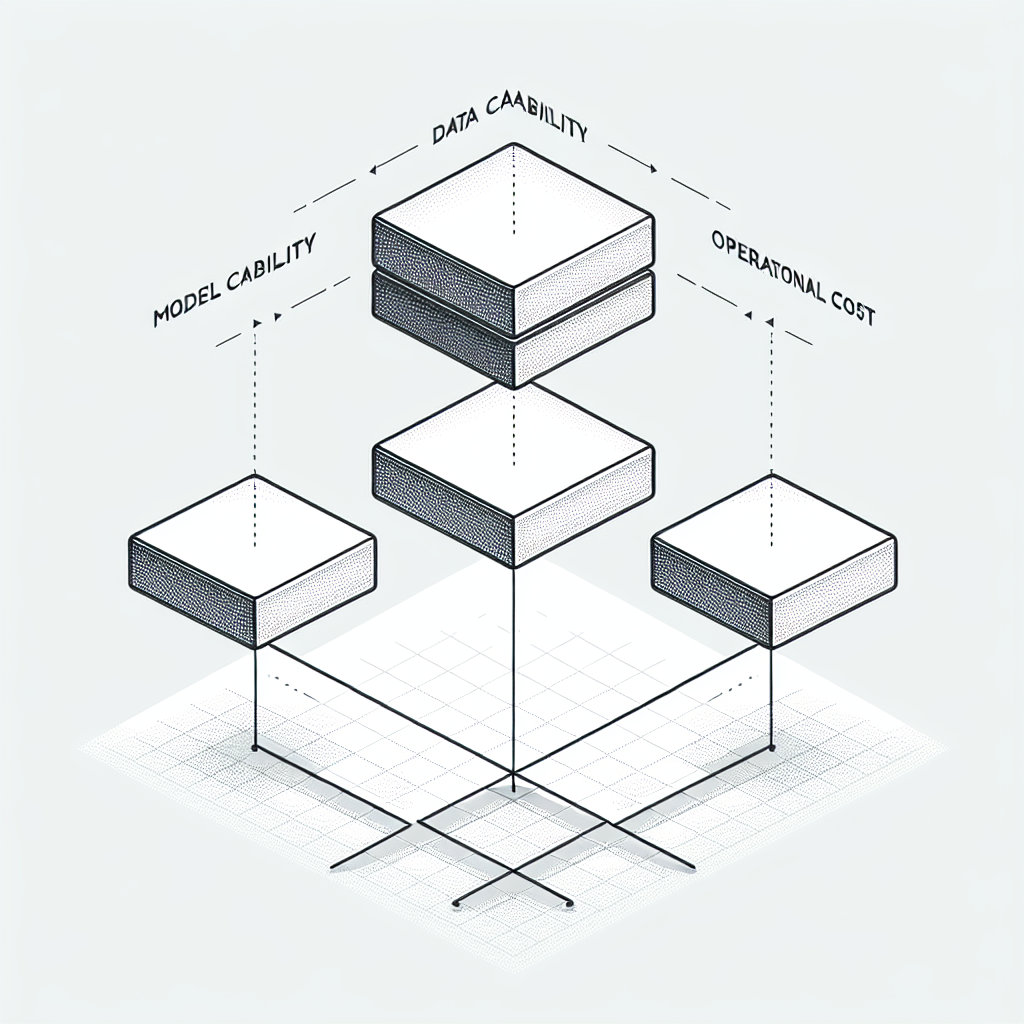
Constraints show up first in latency. If the request path adds a model to a user-facing surface, every millisecond now matters. Precomputation and caching suddenly outrank raw accuracy. If the model’s compute footprint is heavy, you either degrade precision under load or accept worse user experience. Neither feels good; you pick the least damaging option based on the flow that makes money.
Boundaries show up in data lineage. Training and inference drift apart the minute production logs diverge from the curated datasets used to build the model. The architecture needs a narrow path for what counts as valid input—contracts, schemas, timeliness—and it needs a visible mechanism for rejecting or quarantining out-of-spec data. That costs time and budget, but it saves you from covert degradation.
Failure modes look mundane until they compound. A dataset delay makes the model stale; caching keeps stale predictions around; the UI depends on those predictions to sort content; ranking collapses; users churn. The fix is not a better model; it’s an architecture that isolates risk and shortens the feedback loop. Fallbacks to deterministic logic keep the operation stable while the model heals.
Finally, cost doesn’t just mean compute. It’s developer time, incident time, and the political capital you burn when outages coincide with launches. The architecture needs visible levers: concurrency caps, dynamic routing between model tiers, and a “kill switch” that operators trust. If these levers aren’t wired, you don’t control the system when it misbehaves; you just observe it.
Sequencing work so value lands before risk mushrooms
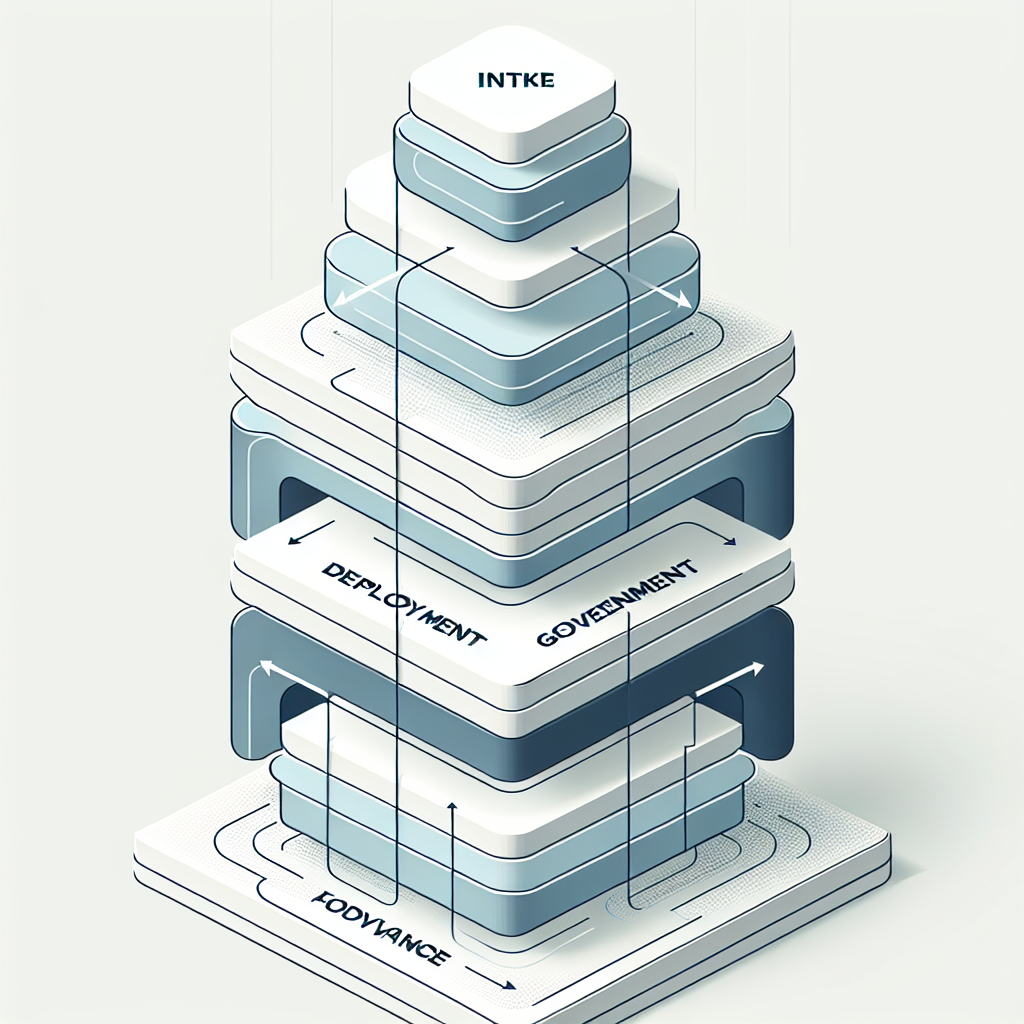
Across environments, the friction is in handoffs. Data engineering pushes a schema change; ML pulls a new training slice; platform tunes autoscaling; product adjusts thresholds; governance asks for audit trails. Each move shifts someone else’s assumptions. Without a sequencing plan, teams step on each other and rework doubles.
Start with the path of value: where the model’s output changes a decision that matters. Align the smallest viable data contract around that path, then place serving and monitoring where you can actually act. The sequencing is counterintuitive: lock the rollback and fallback story first, then tune accuracy. If rollback is unclear, your iteration rate slows to a crawl because everyone is afraid to ship changes.
Expect to revisit decisions after first traffic. Batch vs. real-time will tilt based on observed latency variance. Cache lifetimes shrink when drift becomes visible. Cost models change when quiet hours become peak hours in a new region. Auditors will ask for proof that the model didn’t create discriminatory outcomes, and you’ll learn your logging does not capture the right features. The architecture is a living negotiation with reality.
Where teams slow down: invisible dependencies and undefined authority
Two patterns repeatedly stall progress: invisible dependencies in upstream data and unclear authority over model changes. If nobody owns the freshness SLA for a critical input, your model inherits chaos. If nobody can approve a quick rollback during degraded accuracy, incidents stretch. The architecture should make these decisions legible: who owns freshness, who can flip traffic, who signs off on new training cuts.
Tools only matter when they block or unblock ROI
Tools surface when they bind a constraint. If your serving stack introduces cold-start penalties, the architecture leans toward warm pools and tiered models. If your vector search adds unpredictable latency at load, precomputed indexes move up in priority and you accept slightly less personalization. Each tool either shortens the path to value or increases your operational tax.
Model orchestration is useful when it enforces budgets: concurrency caps, per-route cost ceilings, and feature flags for stepping traffic. Without enforcement, orchestration becomes a thin layer that adds complexity but no control. We put gating at the point of highest risk—where user traffic meets a costly inference—and make sure ownership lines are clear.
Observability tools are only worth their dashboard space if you can trigger actions. Logging that proves drift but fails to drive automated rollback is theater. Tie metrics to behavior: route swaps, cache invalidations, or activating a deterministic fallback. The hard part is agreeing on thresholds that won’t flap during normal variance.
Case patterns where AI helped—and where it hurt
A support triage model increased correct routing significantly, but we discovered a quiet cost: the model favored shorter tickets, pushing long complex cases into manual queues and inflating handle time. We added a rule-based floor for complexity signals and accepted a small accuracy drop to stabilize operations. ROI improved after we controlled the tail behavior, not before.
A personalized ranking feature boosted engagement until data lag hit during a regional outage. The architecture had a fallback, but the thresholds were too generous and didn’t trigger. Users saw stale content for hours. We tightened the freshness contract and moved the trigger closer to the decision point. The lesson: fallbacks must activate under pressure, not just exist in diagrams.
A fraud detector worked well in testing, then tripped alarms when a marketing campaign changed user behavior. We traced the failure to training slices that didn’t include campaign-driven patterns. The fix wasn’t new model magic; it was a faster retraining lane with clearly scoped data sources and a rollback that preserved baseline protection while the model relearned.
Where newcomers and veterans make different trade-offs
Experience changes which pain you choose. The table below is not a scorecard; it’s a pointer to consequences that show up in production.
AreaNewcomer impactExperienced impactData readinessAssumes curated sets scale; drift arrives quietlyLocks contracts; invests early in freshness and lineageModel selectionChases accuracy; misses latency and costFits compute to SLA; accepts simpler models with guardrailsObservabilityMetrics without action pathsThresholds wired to automated fallbacksCost controlUnderestimates inference spikesCaps concurrency; defines surge routingGovernanceLogs exist; audits failTraceable decisions; retained evidenceRollback planManual, slow, riskyPre-approved, reversible, tested under load
FAQ: Questions teams ask when budget and uptime are on the line
How do we decide where to put AI first? Start where the output replaces or accelerates a costly decision. If the path to impact is long or blocked by weak data contracts, you’ll spend more than you save.
What’s the fastest way to reduce serving cost without gutting quality? Tier models by route and cache aggressively on stable features. Keep a small, fast path for high-SLA surfaces and push heavier inference off the hot path.
How do we manage model drift without constant fire drills? Define acceptable variance bands tied to business metrics, not just loss curves. Automate rollback when bands break, then retrain on curated slices with clear provenance.
Where do governance and speed stop fighting? Put audit at the decision boundary. Log what was decided, by which model and data slice, and who approved thresholds. Make those logs actionable for operators.
Do we need real-time everywhere? No. Batch precomputation plus smart caches beat real-time when freshness requirements are looser. Use real-time where the business consequence of staleness is high.
Operational debt shifts from code to data and policy
Given how things behave today, the responsibility moves away from model cleverness and toward data contracts, enforcement mechanisms, and the ability to unwind changes fast. The quiet change is that operations owns the levers, not the model: routing, caps, fallbacks, and evidence trails.
changes over time flow chart in 1 line: models → policies → data pipelines → monitoring → business processes