
Founder & CEO, Devot AI
A multi-domain Data Scientist and Software Engineer specializing in NLP, Large Language Models, and scalable AI systems. Aviral leads Devot AI with a focus on building production-ready solutions that solve complex business challenges.
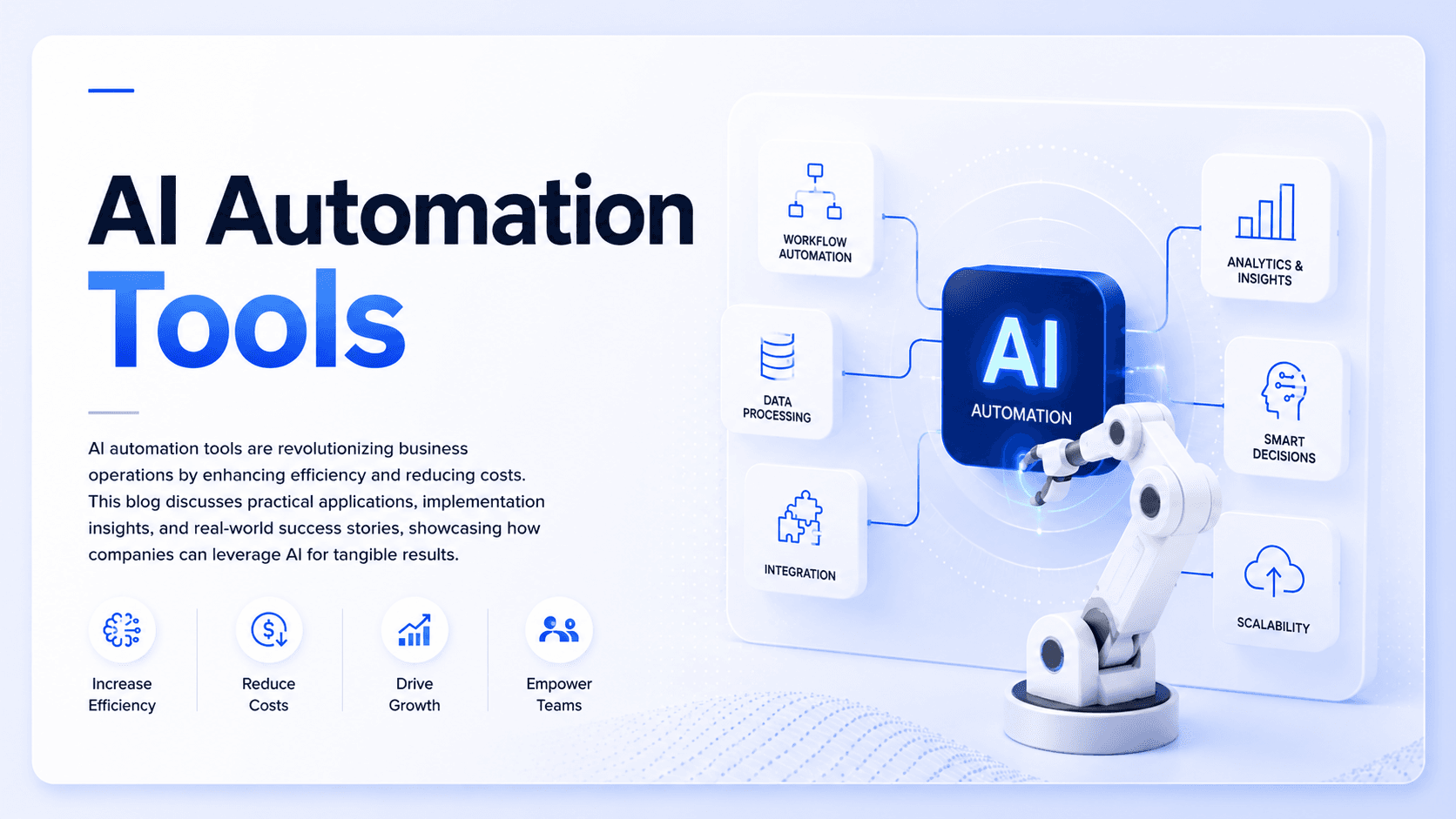
In the fast-evolving landscape of business, leveraging technology is crucial for staying competitive. AI automation tools stand out as game-changers, offering tangible benefits in operational efficiency, cost reduction, and improved decision-making. In this article, we will explore the real-world applications of AI automation tools, backed by data-driven insights, to help enterprises realize their potential.
Understanding AI Automation Tools
AI automation tools utilize artificial intelligence to perform repetitive tasks traditionally handled by humans. These tools are not only capable of executing processes faster but also learning and adapting from data inputs. Examples range from automated customer service chatbots to sophisticated data analysis platforms.
The Business Case for AI Automation
Deploying AI automation tools can lead to significant operational improvements. According to a study by McKinsey, organizations that implement AI in their operations can yield productivity gains of 20-30%. Notably, automated processes can complete tasks in hours that would typically require human attention for days.
Implementing AI Automation Tools
For businesses keen on integrating AI automation tools, the first step is identifying suitable use cases. Common applications include:
Customer Support: AI chatbots can handle FAQs, ticketing, and customer inquiries, reducing response times by up to 90%. This has proven to increase customer satisfaction while allowing human agents to focus on complex issues.
Data Analysis: Tools that analyze large datasets can produce insights that drive strategic decision-making. For example, machine learning algorithms can help predict sales trends, leading to more accurate inventory management and reducing overstock by 25%.
Marketing Automation: AI tools can tailor marketing campaigns based on customer behavior, enhancing engagement. Businesses using AI in their marketing strategy report a 10-15% increase in conversion rates.
Choosing the Right Tools
With a myriad of AI automation tools available, selecting the right one can be overwhelming. Key factors to consider include:
Integration Capabilities: Ensure the tool can seamlessly integrate with your existing systems to maximize efficiency.
User-Friendliness: A tool that requires extensive training may hinder adoption. Look for solutions that offer intuitive interfaces.
Scalability: As your business grows, your automation needs may change. Opt for tools that can scale accordingly without significant additional investments.
Measuring the Impact of Automation
To justify the investment in AI tools, businesses must measure their impact. Key performance indicators (KPIs) to monitor include:
Cost Savings: Track reductions in labor costs and operational expenses resulting from automation.
Productivity Gains: Measure the increase in output or reduction in task completion time.
Customer Satisfaction: Survey clients post-implementation to assess improvements in service quality.
Real-World Success Stories
Several companies have successfully harnessed AI automation tools to transform their operations:
A Major Retailer: Implemented an AI-driven inventory management system that reduced stock shortages by 30% and improved inventory turnover, significantly boosting sales.
A Financial Institution: Utilized AI chatbots to handle customer inquiries, leading to a 40% decrease in wait times and a rise in customer satisfaction scores.
Overcoming Implementation Challenges
Despite the clear advantages, some companies face hurdles when implementing AI automation tools:
Resistance to Change: Employees may be apprehensive about the shift to automation. Providing comprehensive training and clear communication can ease this transition.
Data Quality: AI effectiveness is contingent on high-quality data. Investing in data management processes should be a priority for businesses.
Conclusion
AI automation tools represent a pivotal advancement for businesses aiming to enhance efficiency and drive growth. By understanding their applications, choosing the right tools, and measuring their impact, organizations can unlock the full potential of automation. As the landscape continues to evolve, embracing AI technology is not just an option—it's becoming a necessity for sustainable business success.