
Founder & CEO, Devot AI
A multi-domain Data Scientist and Software Engineer specializing in NLP, Large Language Models, and scalable AI systems. Aviral leads Devot AI with a focus on building production-ready solutions that solve complex business challenges.
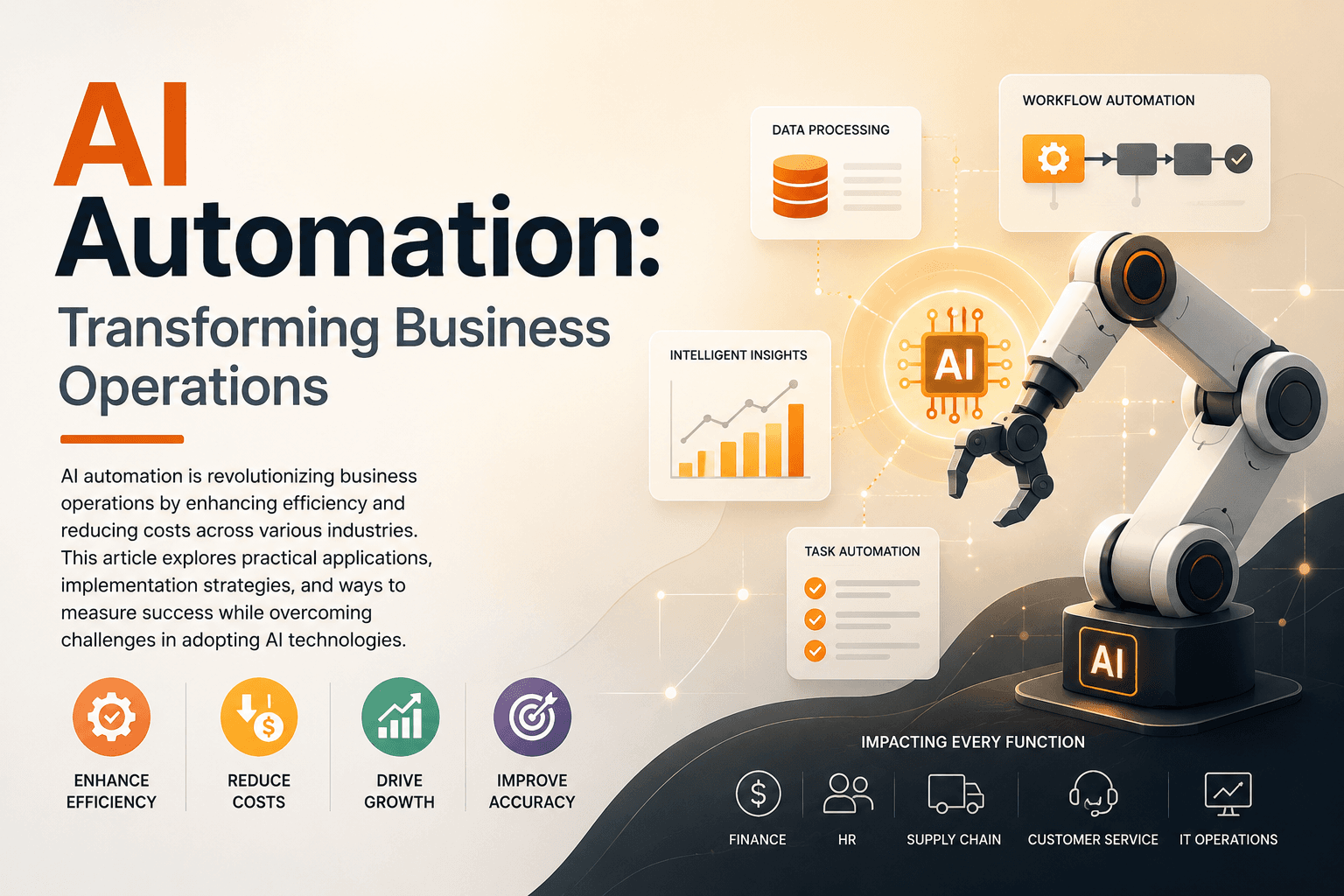
In today’s hyper-competitive landscape, AI automation is becoming an indispensable tool for businesses seeking to improve efficiency, reduce costs, and enhance service delivery. By embedding AI-driven processes into everyday operations, companies not only streamline workflows but also position themselves to respond more nimbly to market demands.
Understanding AI Automation
AI automation refers to the use of artificial intelligence technologies to automate tasks that typically require human intelligence. This can include anything from data entry and analysis to customer service interactions and predictive analytics. Unlike traditional automation, which relies on predefined algorithms, AI automation adapts and learns from data patterns, making it more effective in handling complex tasks.
Real-World Applications
Companies across various sectors are leveraging AI automation to transform their operations. For instance, in the manufacturing industry, organizations are utilizing AI-driven robotics for tasks such as assembly line work, quality control, and inventory management. Recent studies indicate that businesses that have implemented AI in their manufacturing processes have seen productivity improvements of up to 30% while reducing operational costs by 20%.
In retail, AI automation plays a crucial role in enhancing customer experiences. Automated systems analyze shopper behavior to personalize marketing efforts, optimize inventory, and manage supply chain operations more efficiently. Retailers report that using AI-driven automation tools has led to an increase in sales by up to 15%, showcasing how technology can meaningfully impact bottom-line performance.
Implementation Insights
Integrating AI automation into business operations is not simply a plug-and-play process. Organizations need a well-defined strategy to realize its full benefits. Here are some key implementation insights:
Define Clear Objectives: Establish what you want to achieve with AI automation. Whether it’s reducing costs, improving service speed, or enhancing data accuracy, clear objectives will guide your implementation strategy.
Assess Current Processes: Evaluate existing workflows to identify which areas would benefit most from automation. Consider processes that are repetitive, time-consuming, or prone to human error.
Start Small: Begin with pilot projects in areas where quick wins are possible. This approach allows you to test assumptions, learn from outcomes, and gradually scale up successful initiatives.
Invest in Training: Ensure your staff is trained to work alongside AI systems. This will increase adoption rates and maximize the technology’s effectiveness.
Measuring Success
Once AI automation is implemented, measuring its effectiveness is paramount. Key performance indicators (KPIs) to track include:
Time savings for automated versus manual processes.
Cost reductions in operational expenses.
Improvement in service delivery times.
Enhancements in customer satisfaction scores.
By monitoring these KPIs, organizations can make data-driven decisions to iterate and improve their AI automation strategies.
Overcoming Challenges
Despite its benefits, implementing AI automation is not without challenges. Concerns around data security, technology integration, and employee resistance can pose obstacles. Addressing these challenges requires:
Proactive Communication: Involve employees in the change process, explaining the benefits of AI and how it can enhance their roles rather than replace them.
Robust Security Measures: Ensure that proper security protocols are in place to protect sensitive data.
Flexible Integration Solutions: Choose AI solutions that can seamlessly integrate with existing systems to reduce friction during implementation.
Conclusion
AI automation is more than just a trend; it is a critical component for businesses looking to thrive in a digital economy. By embracing AI-driven processes, companies can automate mundane tasks, reduce costs, and provide superior service. As technology continues to evolve, those who adopt AI automation today will position themselves as leaders in their respective industries.