
Founder & CEO, Devot AI
A multi-domain Data Scientist and Software Engineer specializing in NLP, Large Language Models, and scalable AI systems. Aviral leads Devot AI with a focus on building production-ready solutions that solve complex business challenges.
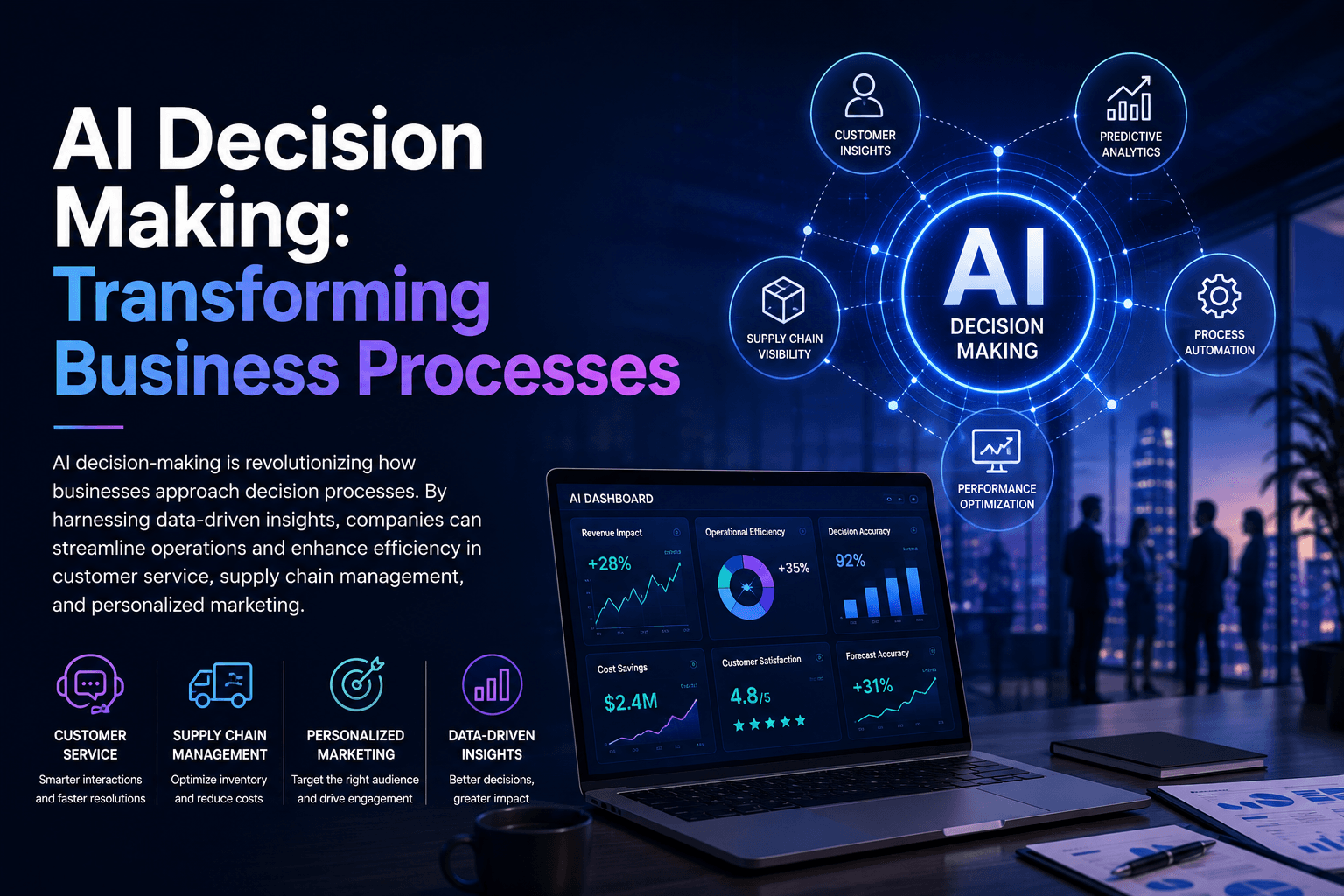
In today’s fast-paced business environment, the ability to make informed decisions quickly can be the difference between leading the market and falling behind. AI decision-making leverages the vast amounts of data generated by companies to provide actionable insights and streamline decision processes. This blog explores how enterprises can implement AI decision-making solutions effectively, focusing on real-world applications, and the tangible business value they create.
Understanding AI Decision Making
AI decision-making refers to the algorithms and systems that analyze data, recognize patterns, and provide recommendations or predictions to inform business strategies. Unlike traditional decision-making models reliant on historical data and human intuition, AI decision-making incorporates machine learning and predictive analytics, resulting in data-driven approaches that enhance accuracy and efficiency.
Real-World Applications
AI decision-making processes can be integrated into various business operations, including customer service, supply chain management, and marketing. By utilizing AI, companies can harness their data to optimize performance and achieve significant improvements. Here are notable applications:
1. Customer Service Automation
Integrating AI chatbots into customer service operations enables businesses to provide faster and more accurate responses to customer inquiries. Research shows that companies employing AI-assisted customer service can reduce response times by up to 80%, thereby enhancing customer satisfaction and loyalty.
2. Supply Chain Optimization
AI-driven analytics can improve supply chain management by predicting demand fluctuations and optimizing inventory levels. Companies that have adopted AI in their supply chain operations report a decrease in excess stock by approximately 15%, resulting in significant cost savings and improved cash flow.
3. Personalized Marketing Campaigns
Businesses can leverage AI to analyze consumer behaviors and preferences, allowing for personalized marketing strategies that resonate with audiences. According to a study, marketers using AI see an average increase of 20% in customer engagement rates due to targeted advertising efforts.
Implementing AI Decision-Making Solutions
Transitioning to AI decision-making may seem daunting, but with a structured approach, enterprises can navigate the process smoothly. Here’s how to effectively implement AI solutions in decision-making:
1. Define Clear Objectives
Before deploying AI, it's critical to outline specific goals. Whether it’s improving customer satisfaction rates or enhancing supply chain efficiency, having well-defined objectives will guide the implementation process.
2. Invest in Quality Data
AI thrives on data. Investing in quality data collection processes and ensuring data accuracy is crucial. Establishing robust data governance policies will support the effective training of AI models and enhance decision-making outcomes.
3. Choose the Right Tools
The market offers various AI tools, ranging from machine learning platforms to specialized analytics software. Selecting tools that align with your business objectives and data needs is essential for successful deployment.
4. Train Your Team
While AI systems automate processes, human expertise remains vital. Training staff on how to interpret AI-generated insights will enhance their decision-making capabilities and ensure better integration of AI into daily operations.
5. Evaluate and Adjust
Post-implementation, businesses should regularly assess AI performance and its impact on decision-making. Gathering feedback, monitoring KPIs, and making necessary adjustments can lead to continuous improvement.
Real-Life Success Stories
Several enterprises have successfully harnessed AI in decision-making, resulting in remarkable outcomes. For instance, a leading retail company utilized AI-driven analytics for inventory management, leading to a 30% reduction in stock-out occurrences and a 10% increase in sales within the first quarter post-implementation.
Conclusion
AI decision-making represents a transformative opportunity for businesses looking to enhance their operational efficiency and strategic capabilities. By embracing AI, companies can make faster, more informed decisions based on data-driven insights, ultimately driving growth and maintaining competitive advantage. As AI technology continues to evolve, businesses that adopt these solutions stand to benefit significantly in the dynamic market landscape.