
Founder & CEO, Devot AI
A multi-domain Data Scientist and Software Engineer specializing in NLP, Large Language Models, and scalable AI systems. Aviral leads Devot AI with a focus on building production-ready solutions that solve complex business challenges.
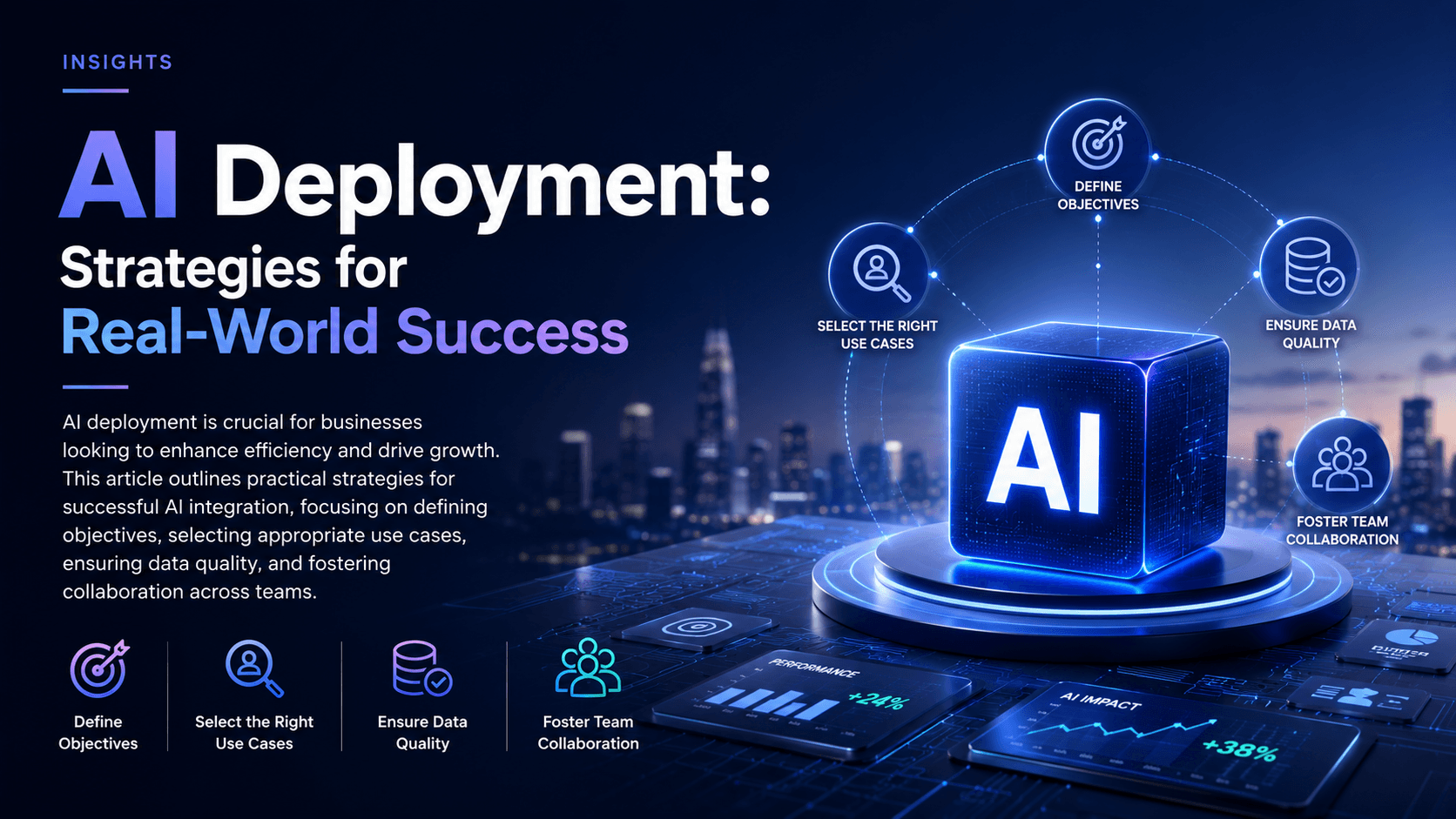
As businesses increasingly seek to harness the power of artificial intelligence (AI), understanding how to effectively deploy these technologies becomes paramount. Successful AI deployment encompasses practical strategies that drive business impact, streamline operations, and enhance decision-making. Here, we explore actionable insights to ensure your organization maximizes the benefits of AI.
Understanding AI Deployment
AI deployment involves integrating AI systems into existing business processes and workflows. This integration can lead to significant improvements in efficiency, cost savings, and overall productivity. The key to effective deployment lies not just in the technology itself but in how it is applied to meet specific business needs.
Identify Business Objectives
Every successful AI implementation begins with a clear understanding of business objectives. Whether the goal is to enhance customer service through chatbots, optimize supply chain logistics, or improve sales forecasting, clearly defined objectives guide the deployment process. According to a recent survey, organizations that clearly articulate their AI goals experience a 30% higher success rate in implementations.
Choose the Right Use Case
Selecting the appropriate use case for AI deployment is crucial. Not all processes will benefit equally from AI integration. For example, implementing AI for predictive analytics in inventory management can reduce holding costs by up to 25%, as it allows businesses to optimize stock levels based on demand forecasting. Evaluating potential use cases in terms of value, feasibility, and impact will help prioritize projects that align with business goals.
Data Quality and Management
Data serves as the foundation for AI systems. High-quality, structured data is essential for training machine learning algorithms effectively. Organizations should conduct a comprehensive data audit to identify gaps in data quality and accessibility. Findings from industry studies indicate that improving data quality can boost AI performance metrics by around 20%. Implementing robust data collection, storage, and management practices is imperative for successful AI deployment.
Developing an Iterative Approach
AI deployment should not be viewed as a one-time project but rather as an ongoing process. An iterative approach allows organizations to refine algorithms based on real-time feedback and performance metrics. For instance, implementing machine learning models incrementally helps in identifying errors and optimizing performance without disrupting core business functions. Organizations using iterative deployment strategies report up to 40% faster adaptation to the changing market demands.
Collaboration Across Teams
Successful AI deployments require collaboration across different departments, including IT, operations, and business units. Engaging cross-functional teams can foster a culture of innovation and ensure that all stakeholders are aligned with the project's goals. Research indicates that cross-team collaboration can lead to a 50% increase in project success rates, as diverse perspectives can enhance the solution's effectiveness. Regular workshops and communication channels can facilitate this collaboration, ensuring all team members are on the same page regarding AI implementation efforts.
Monitoring and Evaluation
Post-deployment, continuous monitoring is key to ensuring that AI systems deliver the expected outcomes. Organizations should establish KPIs aligned with their initial business objectives to assess AI performance. Regular evaluations can help identify areas for improvement and enable timely adjustments to enhance performance. It is reported that companies conducting regular performance reviews see an average of 15% improvement in user satisfaction and engagement levels over time.
Examples of Successful AI Deployment
Numerous enterprises have effectively deployed AI to drive substantial business benefits. For instance, a retail company that implemented AI-driven personalization strategies reported a 10% increase in sales within just six months. By utilizing machine learning algorithms to analyze customer behavior, they were able to tailor marketing efforts, resulting in higher conversion rates.
Similarly, in the manufacturing sector, a firm utilizing AI for predictive maintenance saw a 20% reduction in equipment downtime. By predicting failures before they occur, the company maximized operational uptime and significantly decreased maintenance costs.
Conclusion
In conclusion, effective AI deployment is achievable when tailored strategies align with business objectives, data management practices are robust, and collaboration thrives across teams. With the potential to deliver significant improvements in efficiency and revenue, organizations that embrace AI with a practical approach are better positioned to thrive in today’s competitive landscape.