
Founder & CEO, Devot AI
A multi-domain Data Scientist and Software Engineer specializing in NLP, Large Language Models, and scalable AI systems. Aviral leads Devot AI with a focus on building production-ready solutions that solve complex business challenges.
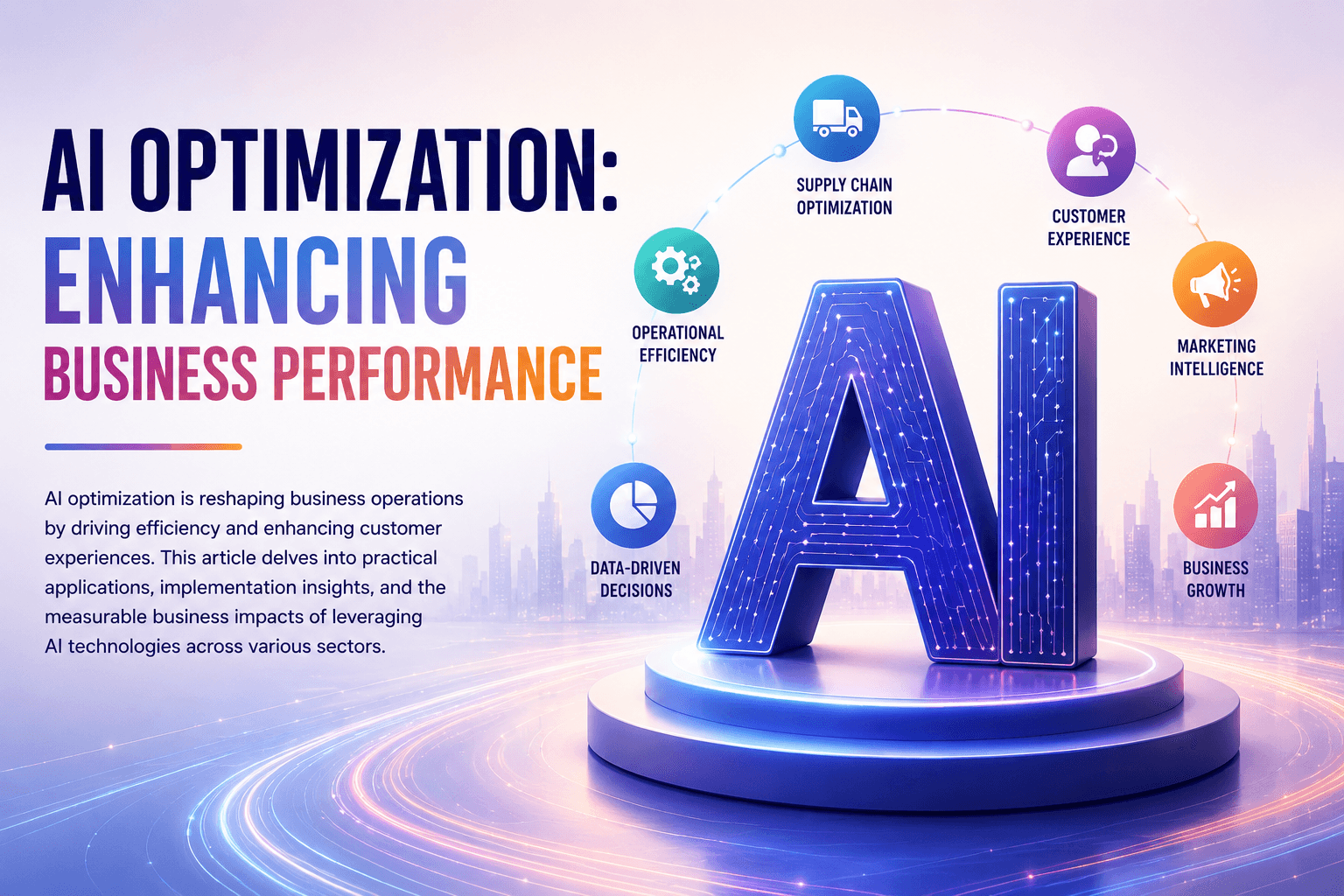
In today's rapidly evolving business landscape, organizations are increasingly turning to AI optimization to drive efficiency and competitive advantage. From enhancing operational processes to improving customer experiences, AI technologies empower enterprises to capitalize on their data, streamline workflows, and make informed decisions. In this article, we explore practical applications of AI optimization and how businesses can implement these strategies for substantial impact.
Understanding AI Optimization
AI optimization refers to leveraging artificial intelligence technologies to improve a range of business operations. This can include anything from predictive analytics for supply chain management to natural language processing for customer service automation. The goal is to harness data insights and algorithmic models to enhance performance and enable agile decision-making.
The Business Impact of AI Optimization
One of the most compelling arguments for adopting AI optimization strategies is their concrete impact on business performance. Studies indicate that businesses implementing AI-focused solutions can see productivity increases of up to 40%. Additionally, companies can reduce operational costs by approximately 20-25%, as AI solutions streamline processes and reduce the need for manual intervention.
Practical Applications of AI Optimization
1. Predictive Analytics in Supply Chain Management
For enterprises with complex supply chains, AI optimization through predictive analytics has become a game-changer. By analyzing historical and real-time data, companies can predict demand fluctuations and adjust inventory levels accordingly. For example, a leading retail chain adopted AI-driven analytics and improved its inventory turnover by 30%. This not only reduced excess inventory costs but also enhanced customer satisfaction due to improved product availability.
2. Enhancing Customer Experiences with NLP
Natural language processing (NLP) applications in customer support can significantly reduce response times and improve satisfaction ratings. Chatbots powered by AI can handle up to 90% of customer inquiries without human intervention. A case study involving digital services showed that the deployment of an AI chatbot led to a 50% reduction in response time and a 20% increase in customer satisfaction ratings. Organizations that utilize these optimizations ensure they provide timely, accurate assistance to customers.
3. AI-Driven Marketing Strategies
AI optimization can refine marketing strategies through customer segmentation and targeted campaigns. Machine learning algorithms analyze buyer behaviors and predict outcomes for various marketing initiatives, leading to more effective campaign management. Businesses applying AI-driven insights reported a 15-20% increase in conversion rates. One SaaS company reportedly saved thousands in operational costs by optimizing its ad spend, resulting in higher returns for its marketing investments.
Implementing AI Optimization: Steps to Success
To effectively implement AI optimization within your organization, consider the following actionable steps:
Identify Key Focus Areas: Determine which areas of your business could benefit most from AI optimization, focusing on processes that are time-consuming or prone to error.
Data Accessibility: Ensure that your data is clean, comprehensive, and accessible to support machine learning algorithms. Investing in data management systems is crucial.
Choose the Right Technology: Select AI tools that align with your business needs and objectives. Consider both cloud-based solutions and on-premises software based on your infrastructure.
Train Employees: Equip your workforce with the necessary skills to leverage AI solutions. Continuous training programs can enhance employee engagement and effectiveness in using AI tools.
Monitor and Adjust: Regularly assess the performance of your AI solutions. Use KPIs to gauge success and make adjustments where necessary to maximize impact.
Conclusion
AI optimization is not simply a trend; it is a transformative approach that can drive significant improvements in operational efficiency and customer engagement. By focusing on practical implementations and leveraging AI technologies, businesses can unlock new growth opportunities and maintain a competitive edge in their respective markets. Embracing AI is not just about technology; it is about smartly integrating it into your business processes for tangible outcomes.