
Founder & CEO, Devot AI
A multi-domain Data Scientist and Software Engineer specializing in NLP, Large Language Models, and scalable AI systems. Aviral leads Devot AI with a focus on building production-ready solutions that solve complex business challenges.
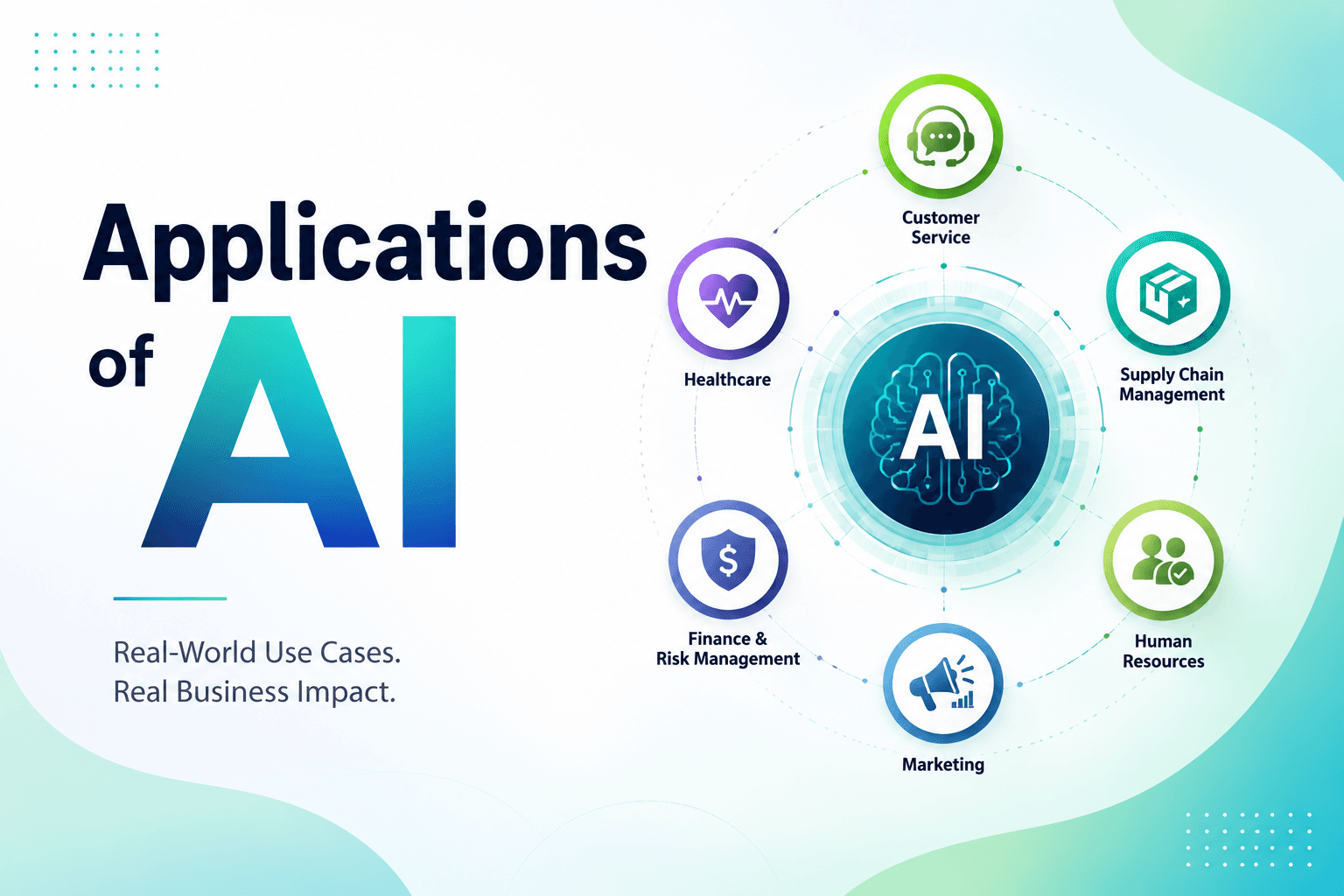
Artificial Intelligence (AI) is no longer a futuristic concept; it is here, reshaping businesses across various sectors. Organizations today harness the power of AI to streamline operations, improve decision-making, and enhance customer experiences. In this blog, we will explore practical applications of AI that deliver measurable business value, highlighting real-world use cases and their outcomes.
1. AI in Customer Service
Enhancing customer interactions is one of the most significant applications of AI. Chatbots and virtual assistants powered by AI can handle a high volume of customer inquiries, significantly reducing the need for human intervention. For instance, a leading retailer implemented an AI-driven chatbot that managed 80% of customer inquiries, resulting in a 30% reduction in response time. This not only improved customer satisfaction but also allowed human agents to focus on more complex queries, thereby elevating overall service quality.
2. AI in Supply Chain Management
Optimizing supply chain operations is critical for companies aiming to reduce costs and improve efficiency. AI algorithms can analyze vast datasets to forecast demand more accurately and identify potential disruptions in the supply chain. For example, a manufacturing firm applied AI-driven predictive analytics to its supply chain processes, leading to a 20% decrease in inventory costs and a 15% reduction in stockouts. By leveraging AI, businesses can better align their inventory with market demands, ultimately driving profitability.
3. AI in Human Resources
AI's role in HR has transformed how companies approach recruitment and employee management. AI tools can sift through thousands of resumes and identify top candidates based on specific criteria, thus streamlining the recruitment process. A global consulting firm deployed an AI-enhanced recruitment solution that decreased the hiring time by 40%, allowing the HR team to focus on candidate engagement rather than administrative tasks. Moreover, AI can assist in employee retention by analyzing engagement data and identifying potential turnover risks, enabling proactive retention strategies.
4. AI in Marketing
Personalization in marketing has reached new heights with AI. Machine learning algorithms can analyze customer behavior and preferences, enabling businesses to craft tailored marketing campaigns. For instance, an e-commerce platform utilized AI to analyze customer purchase history, resulting in a 25% increase in conversion rates through more personalized product recommendations. By leveraging AI insights, companies can create targeted marketing strategies that resonate with their audience and drive sales.
5. AI in Finance and Risk Management
The finance sector is leveraging AI for risk assessment and fraud detection. AI systems analyze transaction patterns in real-time to identify potentially fraudulent activities, drastically reducing fraud-related losses. A banking institution introduced an AI-driven monitoring system that detected 90% of fraudulent transactions before they were completed, saving millions annually. Additionally, AI tools can assist in credit scoring and risk management, allowing for faster and more accurate assessments, enhancing the overall stability of financial operations.
6. AI in Healthcare
In healthcare, AI applications are proving to be lifesaving. AI algorithms aid in diagnostic processes by analyzing medical images and identifying anomalies with higher accuracy. A research hospital implemented an AI-based imaging tool that improved diagnostic accuracy for conditions like pneumonia, achieving a 30% reduction in misdiagnosis rates. Moreover, AI can optimize treatment plans by analyzing patient data, leading to better health outcomes and reduced healthcare costs.
Conclusion
AI is not just a tool for innovation; it is a transformative force capable of yielding significant business advantages across various sectors. From enhancing customer service to optimizing supply chains and improving diagnostic accuracy in healthcare, the applications of AI are diverse and impactful. Organizations that embrace these technologies can expect to drive operational efficiencies and improve customer satisfaction, ultimately positioning themselves for long-term success in a competitive landscape.