
Founder & CEO, Devot AI
A multi-domain Data Scientist and Software Engineer specializing in NLP, Large Language Models, and scalable AI systems. Aviral leads Devot AI with a focus on building production-ready solutions that solve complex business challenges.
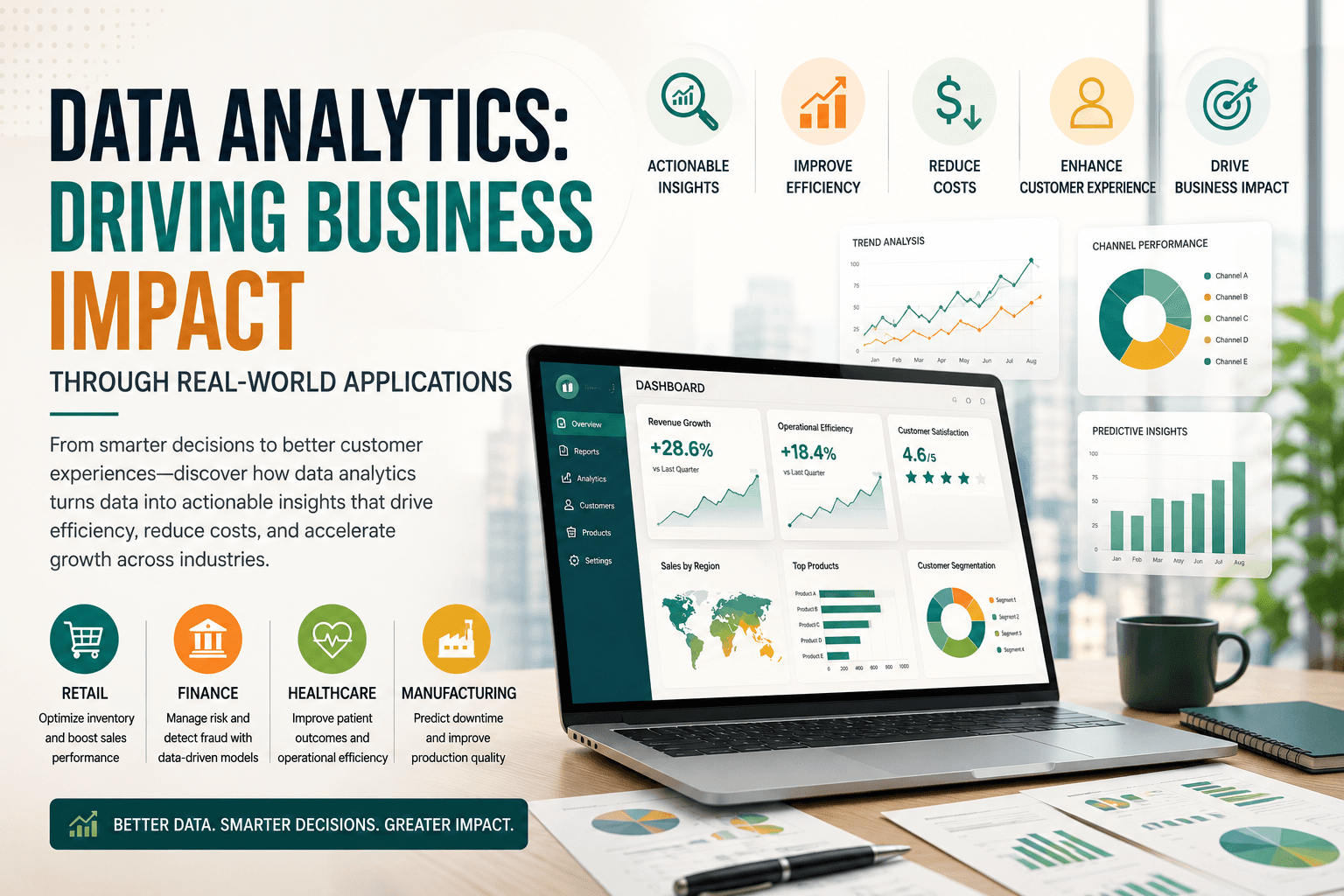
In an era where data reigns supreme, organizations across industries are harnessing the power of data analytics to transform their operations and decision-making processes. From optimizing supply chains to enhancing customer experiences, the practical applications of data analytics are paving the way for significant business impact.
Understanding Data Analytics in a Business Context
At its core, data analytics involves systematically applying statistical and logical techniques to analyze data. However, the value of data analytics transcends mere number crunching. It equips businesses with actionable insights that can lead to increased efficiency, reduced costs, and improved profitability. According to research, companies that leverage data analytics effectively can see a productivity boost of up to 15%.
Real-World Applications of Data Analytics
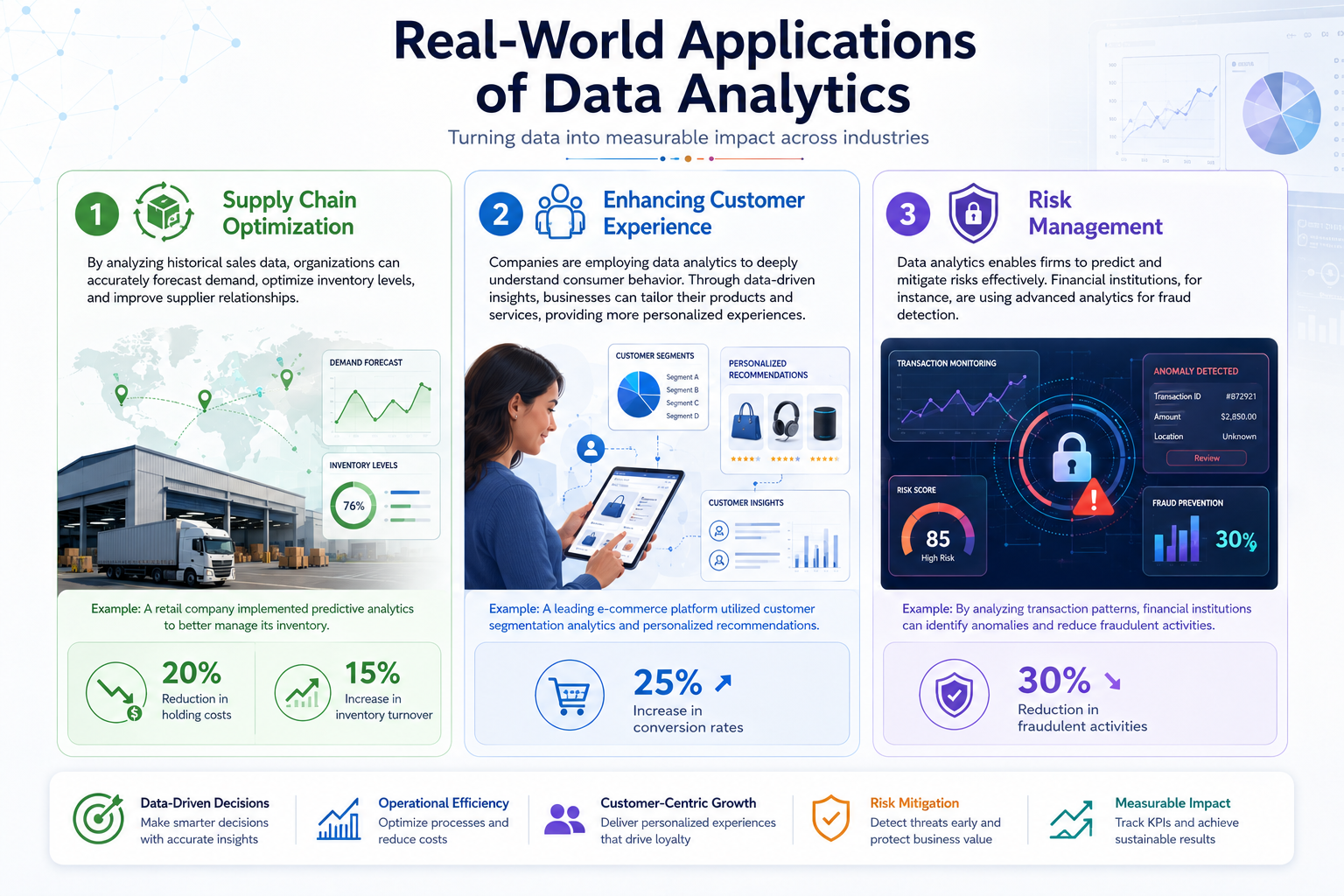
1. **Supply Chain Optimization**: By analyzing historical sales data, organizations can accurately forecast demand, optimize inventory levels, and improve supplier relationships. For example, a retail company implemented predictive analytics to better manage its inventory, resulting in a 20% reduction in holding costs and a 15% increase in inventory turnover.
2. **Enhancing Customer Experience**: Companies are employing data analytics to deeply understand consumer behavior. Through data-driven insights, businesses can tailor their products and services, providing more personalized experiences. For instance, a leading e-commerce platform utilized customer segmentation analytics and personalized recommendations, increasing conversion rates by nearly 25%.
3. **Risk Management**: Data analytics enables firms to predict and mitigate risks effectively. Financial institutions, for instance, are using advanced analytics for fraud detection. By analyzing transaction patterns, they can identify anomalies and reduce fraudulent activities by approximately 30%, significantly saving potential losses.
Implementing Data Analytics: Key Considerations
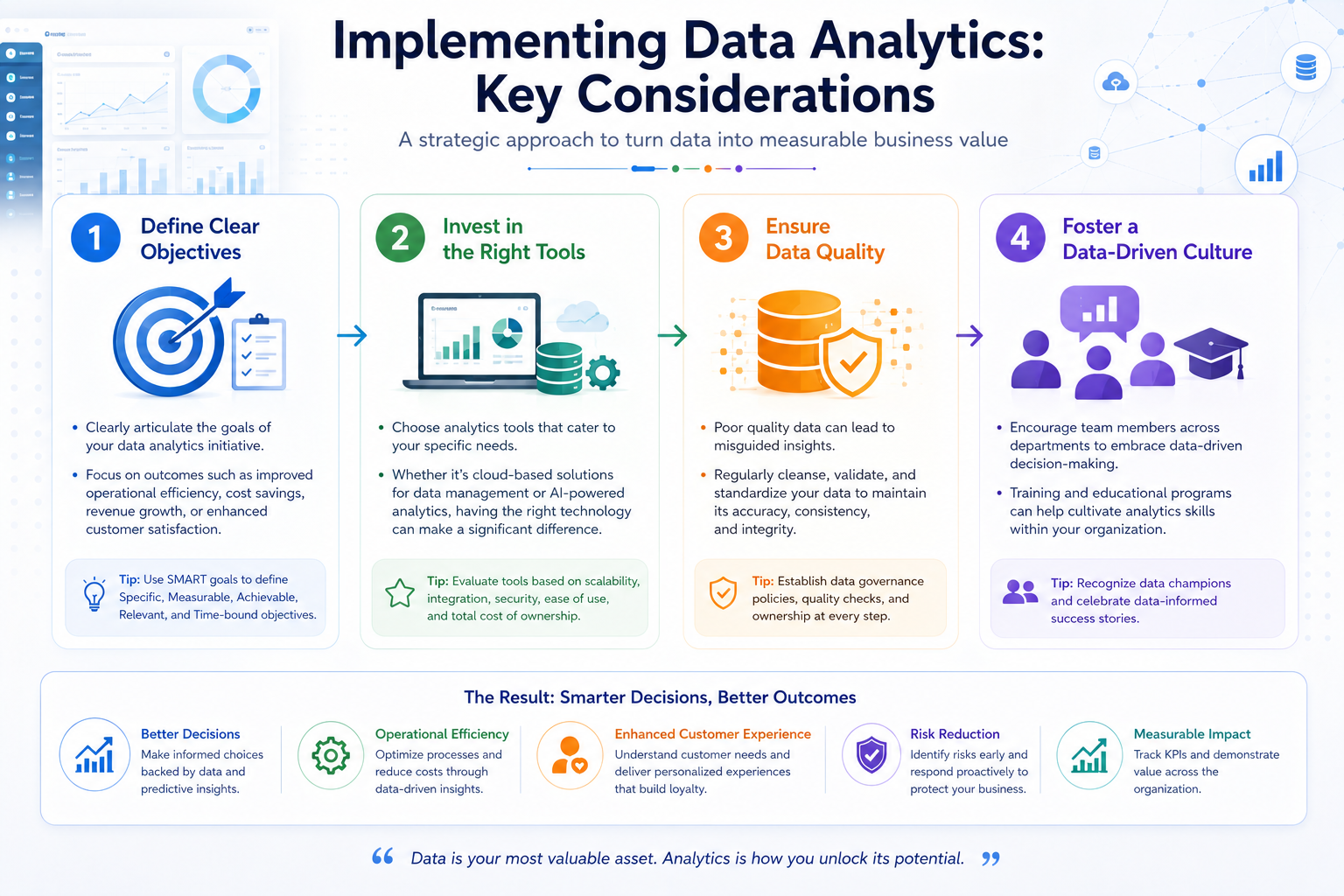
Implementing data analytics solutions requires careful planning and consideration. Here are essential steps to ensure successful execution:
Define Clear Objectives: Clearly articulate the goals of your data analytics initiative—be it improving operational efficiency or enhancing customer satisfaction.
Invest in the Right Tools: Choose analytics tools that cater to your specific needs. Whether it’s cloud-based solutions for data management or AI-powered analytics, having the right technology can make a significant difference.
Ensure Data Quality: Poor quality data can lead to misguided insights. Regularly cleanse and validate your data to maintain its integrity.
Foster a Data-Driven Culture: Encourage team members across departments to embrace data-driven decision-making. Training and educational programs can help cultivate analytics skills within your organization.
Measuring Success and Adjusting Strategies
Once data analytics initiatives are in place, measuring success is crucial. Key performance indicators (KPIs) should be established to track the impact of data-driven decisions. These may include metrics like return on investment (ROI), customer satisfaction scores, and operational costs.
For instance, after implementing a data analytics strategy focused on marketing campaigns, one organization noted a 40% increase in campaign effectiveness, translating to an additional $2 million in sales over a year. However, it is imperative to continuously monitor these metrics and adjust strategies accordingly to stay responsive to market changes.
Conclusion: The Path Ahead
Data analytics is not just a technological advancement; it is a strategic imperative that equips businesses to thrive in today’s competitive landscape. By focusing on actionable insights and specific, measurable outcomes, organizations can unlock extraordinary value from their data assets. As companies navigate their data analytics journey, the emphasis on practical applications, continuous improvement, and business impact will be the cornerstone of success.