
Founder & CEO, Devot AI
A multi-domain Data Scientist and Software Engineer specializing in NLP, Large Language Models, and scalable AI systems. Aviral leads Devot AI with a focus on building production-ready solutions that solve complex business challenges.
When ai adoption crosses from pilot to production, retrieval-augmented generation stops being a feature demo and becomes a pipeline that must live under real SLOs. This is where architecture choices start trading off margins, compliance, and uptime.
Executive pressure meets latency budgets
RAG pipelines move from being exploratory prototypes to systems that carry customer-facing traffic, handle private data, and survive peak loads. That shift happens faster than expected once a single line of business depends on AI answers to close tickets, route workflows, or unlock revenue.
The unavoidable part: models hallucinate, content changes, and governance rules don’t align with raw web-scale prompts. So you anchor generation in your own documents and decisions, and suddenly you own ingestion, chunking, embeddings, indexes, caches, rate limits, and escalation paths.
The moment you connect these pieces in production, two clocks start ticking: latency and freshness. Every choice pushes on one of them. Budget overruns aren’t hypothetical; they show up as token spend spikes and emergency cache layers built overnight.
You don’t get perfection. You get steady, visible trade-offs. Build for them, and ai adoption progresses. Ignore them, and the pipeline becomes another brittle microservice with angry stakeholders.
Introduction: when the chatbot broke and finance cared
We had a support backlog, a knowledge base that was mostly current, and a chatbot that looked good in a demo. Under real traffic, the bot slowed, answers drifted, and compliance flagged unredacted passages. Finance noticed the token spend trend line. Legal noticed a quote from a draft document. Ops noticed p95 sliding past the customer promise.
This is how Engineering AI Adoption via Production RAG Pipelines: Deployment Blueprint for High-Throughput Systems stopped being optional. The chatbot wasn’t the product; the pipeline was. The risk wasn’t theoretical; the incident page filled with “index lag,” “cache stampede,” and “hallucination after content update.” The work became connecting retrieval to governance without breaking latency or exploding cost.
We needed a pipeline we could run, scale, roll back, and observe. Not an idea. Something that tolerates the mess: partial data, inconsistent schemas, uneven traffic, and policy reviews landing at inconvenient hours. That’s the constraint set for meaningful ai adoption.
Latency, privacy, and cost collide in the retrieval path
In production, a working RAG pipeline isn’t a monolith. It’s a succession of small bets: ingestion that doesn’t flood the index, chunking tuned to your documents, embeddings that don’t blow up token counts, a vector store that rides your throughput curve, a query router that knows when to refuse work, caches that avoid stampedes, and guardrails that actually block what policy says they must.
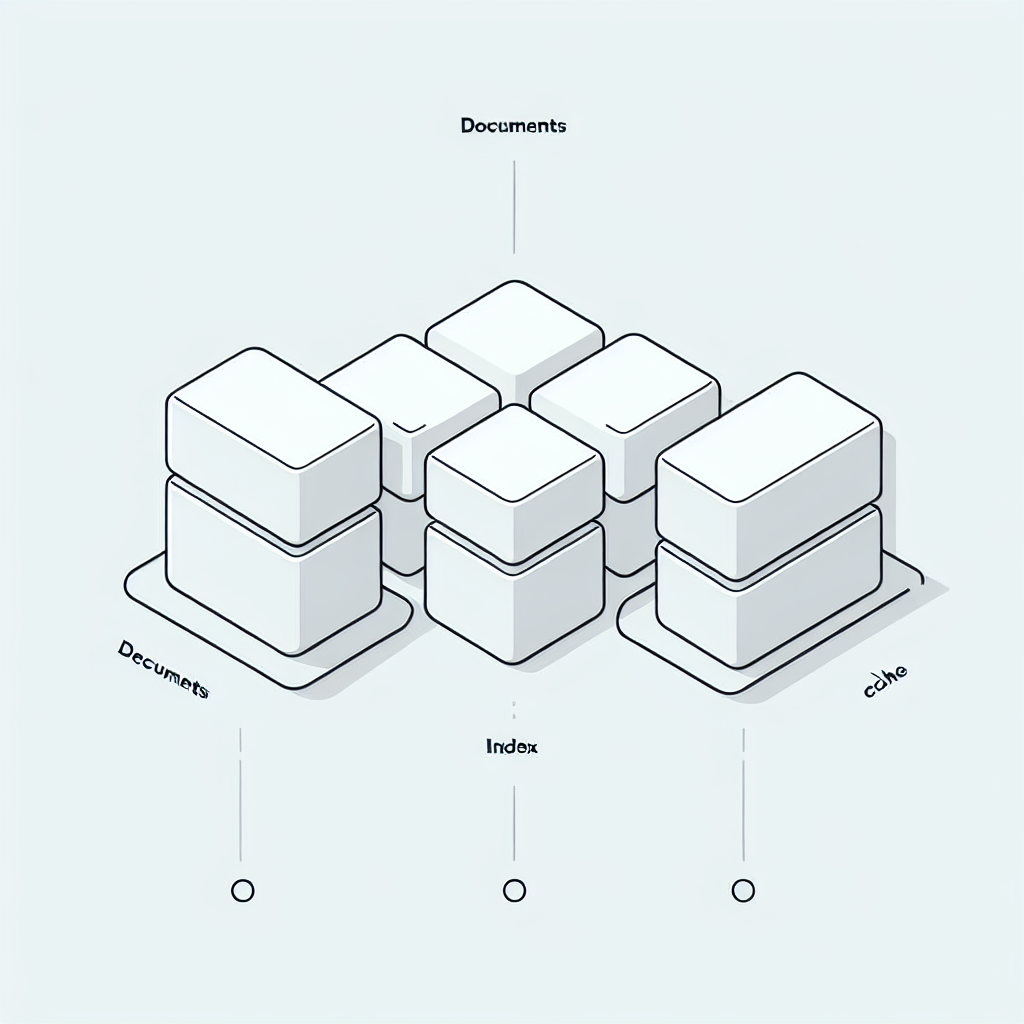
Every component sits inside a latency budget. You’ll have targets for p50 and p95. The query path will cross the boundary more often than you want, because content size and token counts are not uniform. Exceed the budget and a downstream service pays: retries pile up, queues grow, and backpressure becomes the only honest control.
Boundaries are not just technical. Privacy gates go before embeddings. If you accidentally embed sensitive content, you can’t pretend it’s isolated; you have to purge and re-index, and that’s the outage window nobody wants. Legal constraints turn into architectural layers—scrubbers, redactors, consent checks—that you must place ahead of indexing, not after.
Failure modes are mundane. Index freshness lags because ingestion fell behind. Hot partitions appear because a few high-traffic docs dominate retrieval. Model drift shows up as new embeddings that don’t align with the previous distribution, and relevance drops until you re-embed or add hybrid search. Token explosions happen when chunking meets verbose documents, and your cost envelope bursts on an innocent spike.
You will add caches. Embedding caches for repeated queries. Context caches for high-traffic answers. One cache will help, two will help more, and then you’ll hit invalidation pain. Watching a cache stampede punish your vector store is the moment you accept that rate limits and circuit breakers belong in AI systems just as they do in payments and search.
Observability cannot be an afterthought. You’ll need counters for index lag, histograms for retrieval latency, traces across ingestion, retrieval, and generation, and budget monitors for tokens. Alarms that consider traffic shape, not just thresholds, save weekends.
Handoffs that hurt: from ingest to answer under real deadlines

Sequencing matters. The ingest path starts where your data lives: file stores, wikis, ticket systems, release notes. That handoff fails if schemas don’t match and if data owners aren’t part of the contract. Clarify who approves content transformation before embeddings happen; otherwise you’ll embed draft content and spend weeks untangling the mess.
The scrub-and-chunk stage is where policy collides with practicality. Redaction before embeddings is non-negotiable if policy says so. Chunking is a balancing act: smaller chunks improve retrieval precision but can shred context and inflate token use; larger chunks reduce cost per call but can dilute relevance. Expect to revisit chunk size repeatedly as your corpus and traffic change.
Embedding versioning creates hidden dependencies. Upgrade the embedding model and your retrieval consistency drops until you re-embed. Doing that online without downtime is a project by itself: dual-write new vectors, keep dual-read for a window, then cut over. Teams slow here because it’s easy to underestimate indexing throughput and backfill time.
Query routing is where latency and cost are negotiated. The router decides when to hit the vector store, when to consult caches, when to escalate to generation, and when to fail closed. Dependencies pile up: token budgets, content freshness signals, rate limits, and trust signals from guardrails. Small misconfigurations lead to big bills.
Guardrails are not just toxicity filters. They are policy enforcers: allowed sources, allowed document types, allowed audiences. You’ll revisit guardrails when a governance audit finds edge cases. This slows teams down because changes propagate through embeddings, indexes, and routing rules, not just a single config file.
The generation layer is a negotiation with application reality. If the retrieved context is weak, do you block the answer, escalate to a curated fallback, or let the model improvise? That decision sits at the heart of product risk. Teams reopen it after incidents and when stakeholders complain about tone or specificity.
Tools and technologies under budgets, not logos
Tool choices are rarely about features on a slide; they’re about tolerances. A vector store that favors memory graphs can make p95 happy until the corpus grows beyond RAM, and then your throughput tanks at reindex time. A disk-first index can take the opposite hit: slower p50 in exchange for predictable scaling. You choose based on where your load spikes occur and how much you can pre-warm.
Embedding models vary in dimensionality and tokenization quirks, and those differences shift costs. If token limits bite in the generation layer, you trim context and lose answer quality. If embedding dimensionality balloons, your index gets heavier and your tail latency stretches. The constraint is not “the best model,” it’s “the model whose quirks your data and traffic can tolerate.”
Queues and schedulers matter more than anyone admits. A queue with backpressure saves your vector store from stampedes and gives ingest room to breathe. A scheduler that co-locates hot shards with compute reduces tail spikes. Service meshes and feature flags become survival tools when you need to split traffic between old and new embedding versions without blowing SLAs.
Rate limiters are blunt but necessary. They force you to say no when cost or latency goes red. They are where business reality meets architecture: either we accept partial answers and degraded modes, or we turn requests away. That’s not hypothetical if you run production RAG under real money.
Examples and applications where trade-offs hold the line
Legal corpus with weekly updates and nervous auditors
A policy team pushes updated guidance every week. Ingest catches changes, but the index lags during peak business hours. Retrieval serves stale context for a window, and answers contradict current policy. The mitigation was to prioritize hot documents and delay low-risk content. Accuracy improved, but the ingestion backlog grew. Auditors were happy; the operations team kept a quiet alert for sustained lag and accepted that some sections would remain stale during peak traffic.
Support knowledge base with heavy tail queries
A handful of high-traffic articles dominate queries. Caching those answers reduced load dramatically, but cache invalidation caused short bursts of latency when content changed. Switching to cache partitioning by topic smoothed invalidation, at the cost of slightly more storage and slower cold starts. The win was in predictable behavior, not perfect speed.
Engineering playbooks with confidential fragments
PII and sensitive architectures appear in internal docs. A scrubber ahead of embeddings caught most cases, but a new template slipped through and polluted the index. The fix required a purge-and-reindex under pressure. Teams added a pre-embed consent check tied to document metadata. It slowed ingest by a small margin and reduced the chance of repeating the incident.
Marketing content with seasonal spikes
Traffic spiked around launches, pushing p95 beyond the customer target. A temporary switch to hybrid retrieval trimmed generation calls by surfacing exact matches before vector search. Answers became more literal and less nuanced. This was acceptable under the spike. Afterward, the team restored default routing and kept a switch ready for the next event.
Tables and comparisons that help decisions land
This comparison is meant to surface how judgement evolves under pressure.
Decision PressureNew to RAG: default moveExperienced: expected consequenceChunk size tuningSmall chunks for precisionPrecision up, tokens up; re-tune when costs spike or context coherence dropsIndex rebuild after model changeCut over immediatelyDual-write/read to avoid relevance cliff; accept temporary storage overheadCache invalidation on content updatesGlobal cache clearStampede risk; prefer targeted invalidation and partitioned cachesGuardrails placementFilter in generation onlyToo late; scrub before embeddings to avoid contaminated indexesCost spike during traffic surgeIncrease limitsIntroduce hybrid retrieval and degrade modes; protect p95 and budgets first
FAQ: doubts that surface when scaling RAG
How do we keep answers stable when documents change constantly?
Prioritize hot documents in ingest, track index lag, and separate cache layers by topic. Accept small windows of staleness during peaks and give stakeholders visibility into freshness signals.
What happens when we upgrade embeddings?
Expect relevance to wobble. Run dual indices briefly, monitor retrieval drift, and cut over with feature flags. Plan storage and reindex throughput; it’s a real migration, not a toggle.
How do we measure answer quality without labeled datasets?
Use proxy metrics: retrieval hit rates, context coverage, deflection rates, and incident counts. Pair them with spot checks from domain owners. It’s not perfect, but it catches regressions.
How do we avoid runaway token spend?
Trim context with smarter chunking, add retrieval confidence thresholds, and route low-confidence queries to curated fallbacks. Set rate limits that enforce budgets under load.
What’s the safe fallback when retrieval fails?
Return curated answers or block with a transparent message. Letting the model improvise increases risk and erodes trust. Make the fail-closed behavior explicit.
Responsibility shifts to data plumbing and policy signals
Given how things behave today, this is what quietly changes next. Ownership slides from model selection to data freshness, guardrail correctness, and routing policies. The hard work becomes keeping the pipeline honest under traffic, not chasing the latest model.
Model-centric → Pipeline-centric → Data-centric → Policy-centric