
Founder & CEO, Devot AI
A multi-domain Data Scientist and Software Engineer specializing in NLP, Large Language Models, and scalable AI systems. Aviral leads Devot AI with a focus on building production-ready solutions that solve complex business challenges.
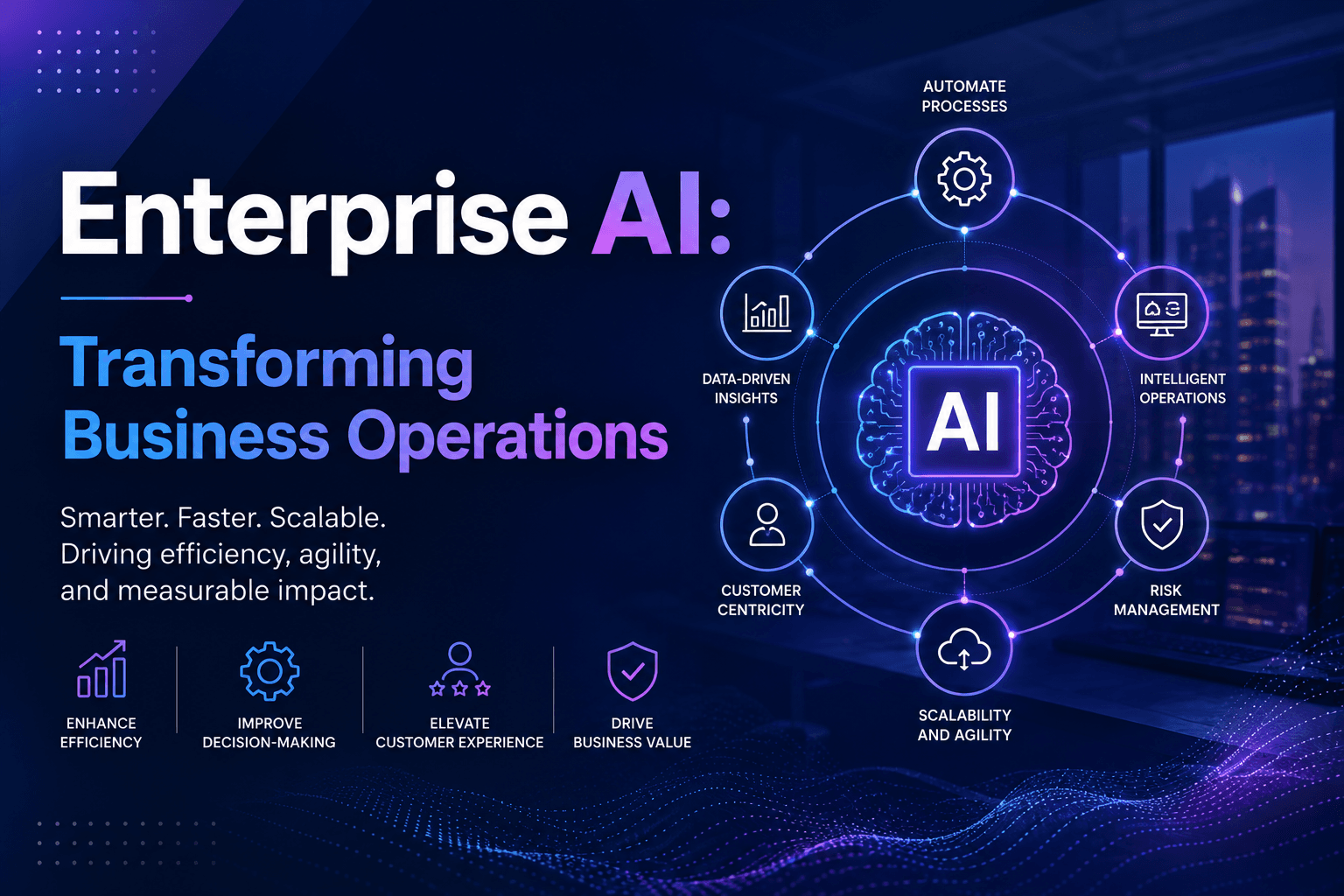
In today’s fast-paced business environment, organizations are increasingly turning to Artificial Intelligence (AI) solutions to gain a competitive edge. Enterprise AI, in particular, offers robust tools and methodologies tailored to meet the unique needs of large organizations. This article delves into the practical applications of enterprise AI and how companies can leverage it to drive significant business value.
Understanding Enterprise AI
Enterprise AI encompasses a wide range of AI technologies specifically designed to optimize operational efficiency, enhance decision-making, and improve customer experiences within large organizations. Unlike traditional AI applications, enterprise AI solutions are built for scalability and integration across various business functions, facilitating a holistic approach to problem-solving.
Key Areas of Implementation
There are several critical areas where enterprise AI can be effectively implemented, including:
Customer Relationship Management (CRM): Implementing AI in CRM systems allows businesses to analyze customer data more effectively, improving engagement strategies. Companies deploying predictive analytics have seen a 20% increase in customer retention rates due to personalized marketing efforts.
Supply Chain Optimization: AI can significantly enhance supply chain management by predicting demand fluctuations and optimizing inventory levels. Businesses utilizing AI-powered forecasting tools have reported an up to 30% reduction in inventory holding costs.
Human Resources: AI-driven recruitment tools can streamline the hiring process by analyzing candidate data to identify top talent. Organizations using AI in hiring have experienced a 50% reduction in time spent on sourcing candidates.
Product Development: AI can be harnessed to analyze market trends and customer feedback, facilitating data-driven product development. Companies leveraging AI insights have reduced their time-to-market by 25-30%.
Real-World Case Studies
To illustrate the tangible benefits of enterprise AI, consider the following examples:
A Global Consumer Electronics Firm: By integrating AI into its supply chain processes, the company improved demand forecasting accuracy by 35%. This led to a significant reduction in excess inventory, helping them save millions annually.
A Fortune 500 Financial Services Company: Leveraging AI for customer insights, this company enhanced its personalized service offerings. As a result, they reported a 15% increase in overall customer satisfaction, translating into higher client retention and new account acquisitions.
Challenges in Implementing Enterprise AI
While the benefits of enterprise AI are compelling, companies might encounter several challenges during implementation:
Data Silos: Many organizations struggle with fragmented data sources, which complicates the AI integration process. A unified data strategy is essential for the successful delivery of AI solutions.
Change Management: Resistance to change from employees can hinder AI adoption. Implementing a robust change management strategy, including training and communication, is crucial to achieving buy-in across the organization.
Skill Gaps: A lack of skilled professionals can impede AI project success. Investing in AI training programs for existing employees can help bridge this skills gap.
Future of Enterprise AI
The future of enterprise AI is promising, with trends indicating an even greater integration into business processes. As technology advances, the adoption of AI will likely continue to rise, enabling even more organizations to achieve operational excellence. AI capabilities will evolve, heralding a new era of automation and intelligent decision-making.
Conclusion
Enterprise AI is not just a technological trend; it is a fundamental shift in how businesses operate. By leveraging AI solutions across various functions, organizations can realize substantial gains in efficiency, effectiveness, and customer satisfaction. As companies continue to navigate the complexities of the digital age, embracing enterprise AI will be vital in achieving sustained business success.