
Founder & CEO, Devot AI
A multi-domain Data Scientist and Software Engineer specializing in NLP, Large Language Models, and scalable AI systems. Aviral leads Devot AI with a focus on building production-ready solutions that solve complex business challenges.
Summary
AI platforms are integrated environments that let teams design, train, deploy, and manage machine learning and generative AI solutions end to end. This guide explains the AI development lifecycle, shows how platforms streamline each stage, and compares major categories of tools. It matters now because effective use of AI platforms dramatically reduces risk and accelerates outcomes.
Introduction
Organizations across education, healthcare, finance, and manufacturing are adopting AI platforms to move from experiments to reliable production systems. Without a coherent platform strategy, teams struggle with fragmented tooling, security gaps, and model drift. A well-chosen platform provides data connectors, training infrastructure, evaluation tooling, governance controls, and deployment pipelines in one place. This guide maps AI platforms to the full AI development lifecycle so students, professionals, and curious learners can build with confidence.
Understanding AI Development
AI development is the disciplined process of turning data and domain knowledge into models that produce useful predictions, classifications, recommendations, or generative outputs. It spans problem framing, data engineering, modeling, evaluation, deployment, monitoring, and governance. AI platforms operationalize this process by offering unified capabilities: scalable compute, experiment tracking, model registries, pipelines, vector databases for retrieval, evaluation harnesses, and security features. The result is faster iteration, reproducible results, and safer deployments.
How AI Development Works in Practice
Problem framing and feasibility
Define objectives, success metrics, constraints, and ethical boundaries. Align stakeholders and identify where AI will add measurable value.
Data strategy and governance
Collect, label, and prepare data. Enforce privacy, lineage, and access controls. Many AI platforms integrate with cloud data warehouses and provide data versioning.
Model development
Train supervised, unsupervised, reinforcement, or generative models. Platforms supply managed notebooks, distributed training, hyperparameter tuning, and model registries.
Evaluation and validation
Use quantitative metrics and qualitative checks. For LLMs, evaluate hallucination, toxicity, and factuality. Platforms provide evaluation suites and comparison dashboards.
Deployment and scaling
Package models as APIs, batch jobs, or streaming services. Platforms automate CI/CD for ML, autoscaling, and cost controls. They also support inference optimizations such as quantization.
Monitoring, retraining, and compliance
Track data drift, model performance, safety signals, and usage. Retrain or update prompts and retrieval pipelines. Platforms offer alerts, audit trails, and policy enforcement aligned to frameworks like the NIST AI RMF.
AI Development Lifecycle at a Glance
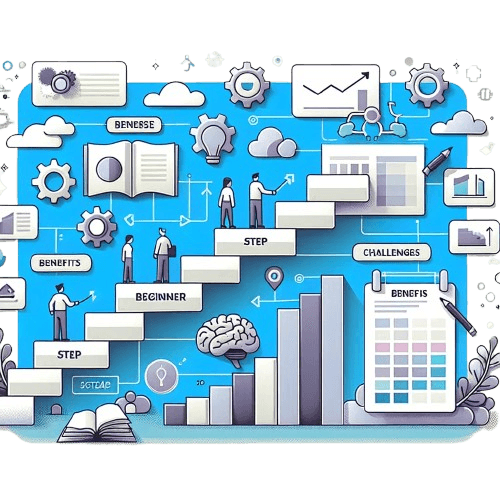
Plan → Data → Model → Evaluate → Deploy → Monitor → Improve. AI platforms knit these phases together with shared infrastructure and governance, reducing handoffs and errors. In practice, teams cycle through these stages continuously to refine performance and reliability.
Building an AI Project Step by Step
Define the use case and measurable outcomes (accuracy, latency, cost, safety).
Select the AI platform category (ML platform, LLM platform, AutoML, MLOps suite) aligned to goals.
Set up secure data access and lineage in your chosen platform.
Profile data quality; create splits and versioned datasets.
Prototype baselines (traditional ML or prompt-only LLM) to establish a reference.
Train or fine-tune models; log experiments, artifacts, and metrics.
Evaluate with offline metrics and task-specific tests; add red-teaming for generative models.
Register the best model; capture metadata, cards, and governance notes.
Package inference (API, batch, streaming); enable autoscaling and observability.
Integrate retrieval (vector database) for LLMs; design guardrails and content filters.
Monitor performance, drift, and safety; schedule retraining or prompt updates.
Review compliance and risk; iterate with business feedback; plan incremental releases.
Tools and Technologies Used in AI Development
Languages
Python for data science and modeling; TypeScript/JavaScript for web and integrations; SQL for data pipelines; Go and Java for high-performance services.
Libraries
PyTorch, TensorFlow, scikit-learn for ML; Hugging Face Transformers for LLMs; LangChain and LlamaIndex for orchestration; OpenAI and Anthropic SDKs for hosted models; XGBoost and LightGBM for tabular modeling; Ray for distributed workloads.
Platforms
Cloud ML platforms: AWS SageMaker, Google Vertex AI, Azure Machine Learning. LLM platforms: OpenAI, Anthropic, Cohere, AWS Bedrock. AutoML platforms: DataRobot, H2O.ai Driverless AI, Vertex AutoML. MLOps platforms: MLflow, Kubeflow, Weights & Biases, Neptune. Vector databases: Pinecone, Weaviate, Milvus. Data platforms: Snowflake, Databricks, BigQuery.
Deployment tools
Docker and Kubernetes for container orchestration; FastAPI and Flask for model APIs; Triton Inference Server for optimized serving; Ray Serve for scalable inference; CI/CD with GitHub Actions and GitLab; feature stores such as Feast.
Examples and Use Cases
Customer support assistant
Retrieval-augmented generation combines an LLM platform with a vector database to answer policy-specific questions and reduce handle time.
Predictive maintenance
ML platforms ingest telemetry, train models to predict failure, and deploy alerts. Integration with edge gateways enables low-latency inference.
Fraud detection
Tabular ML with gradient boosting on a cloud ML platform; continuous monitoring flags drift as fraud tactics evolve.
Personalized recommendations
Embeddings and ranking models served via an MLOps platform; batch jobs refresh candidate sets from a data warehouse.
Document processing
LLM platforms extract entities and summarize; guardrails and human-in-the-loop verification ensure accuracy for compliance-heavy domains.
Comparing Types of AI Platforms
CategoryTypical capabilitiesBest forRepresentative vendorsTrade-offsCloud ML platformsData pipelines, training jobs, tuning, registries, deploymentStructured ML at scaleAWS SageMaker, Google Vertex AI, Azure MLMore setup; broad flexibilityLLM platformsHosted foundation models, fine-tuning, eval, content moderationGenerative AI with fast time-to-valueOpenAI, Anthropic, Cohere, BedrockOngoing API costs; provider lock-inAutoML platformsAutomated feature engineering and model searchRapid baselines and citizen data scienceDataRobot, H2O.aiLess control over modeling detailsMLOps platformsExperiment tracking, model registry, deployment, monitoringOperational excellence for MLMLflow, Weights & Biases, KubeflowRequires integration with data and servingVector databasesSemantic search, retrieval, embeddings storageRAG pipelines for LLMsPinecone, Weaviate, MilvusNew ops patterns; cost for high QPS
Market Trends and Adoption Data
Global spending on AI platforms and applications continues to grow, driven by generative AI and increased automation. Analysts report double-digit annual growth in AI infrastructure and tooling. Teams investing in platform governance and observability report shorter deployment cycles and reduced incident rates.
For risk frameworks, see the NIST AI Risk Management Framework (NIST AI RMF). For responsible AI guidance, see ISO/IEC 23894 (ISO AI risk).
Skill Progression for Working with AI Platforms
Foundations: Data literacy, metrics, basic Python and SQL.
Modeling: Classical ML, embeddings, LLM prompting, evaluation.
Ops: Experiment tracking, registries, CI/CD for ML, monitoring.
Systems: Retrieval pipelines, caching, cost/perf optimization, security.
Governance: Risk assessment, policy, human-in-the-loop review, audits.
Pros and Cons Table
BenefitLimitationPractical considerationFaster time-to-production via integrated toolingVendor lock-in and proprietary featuresFavor portable artifacts (containers, ONNX) and open standardsScalable training and serving on demandCompute costs can spike with experimentationUse quotas, autoscaling, and scheduled shutdownsBuilt-in governance, security, and audit trailsConfiguration complexity for enterprise policiesAdopt templates and policy-as-code to standardizeRobust observability for performance and driftNew operational burden for AI-specific metricsDefine SLOs (latency, accuracy, safety) and alertsSupport for multi-modal and generative workloadsRapidly changing model landscapeAbstract providers and maintain regular evaluation gates
Call to Action
Ready to go deeper on ai platforms and practical implementation? Explore our related guides, pick a pilot use case, and start building with a clear lifecycle and governance plan.
For platform documentation, see AWS SageMaker, Google Vertex AI, Azure Machine Learning, and OpenAI API docs.