Founder & CEO, Devot AI
A multi-domain Data Scientist and Software Engineer specializing in NLP, Large Language Models, and scalable AI systems. Aviral leads Devot AI with a focus on building production-ready solutions that solve complex business challenges.
Cloud 3.0 isn’t a single platform. It’s the moment teams realize the environment is a mix: public regions, private compute, edge nodes, and data that refuses to move.
Executive Summary
Real operators don’t live in one cloud. They juggle flavors, guardrail budgets, and adapt to constraints that arrive mid-sprint.
This piece maps how Cloud 3.0 behaves when the plan collides with latency, compliance, and cost. It shows where friction appears and how teams scale without losing control.
Understand how cloud flavors overlap and where they don’t
See failure patterns that repeat under pressure
Learn a step-by-step way to stitch flavors without lock-in
Use examples to gauge risk, not just potential
Introduction
You’re asked to cut egress, ship a new feature, and keep regional uptime steady. Meanwhile, one dataset needs to stay put for legal reasons, another wants GPUs in a different region, and users demand low latency closer to the edge. This is the daily reality behind All flavors of cloud.
Cloud 3.0 is trending because teams can’t afford monolithic decisions anymore. Hybrid isn’t strategy theater now; it’s the cheapest way to keep data local, smooth out capacity, and avoid being pinned by one provider’s roadmap.
It’s becoming necessary as AI workloads spike, compliance lines harden, and budgets push back. The flavors are no longer tiers. They’re levers you pull mid-run when requirements shift.
Where Cloud 3.0 breaks in practice
Each flavor promises something—reach, control, proximity—but real environments surface the seams. Latency beats theory. Data gravity beats slides. IAM complexity beats good intentions. Concept map: Cloud 3.0 flavors and boundaries
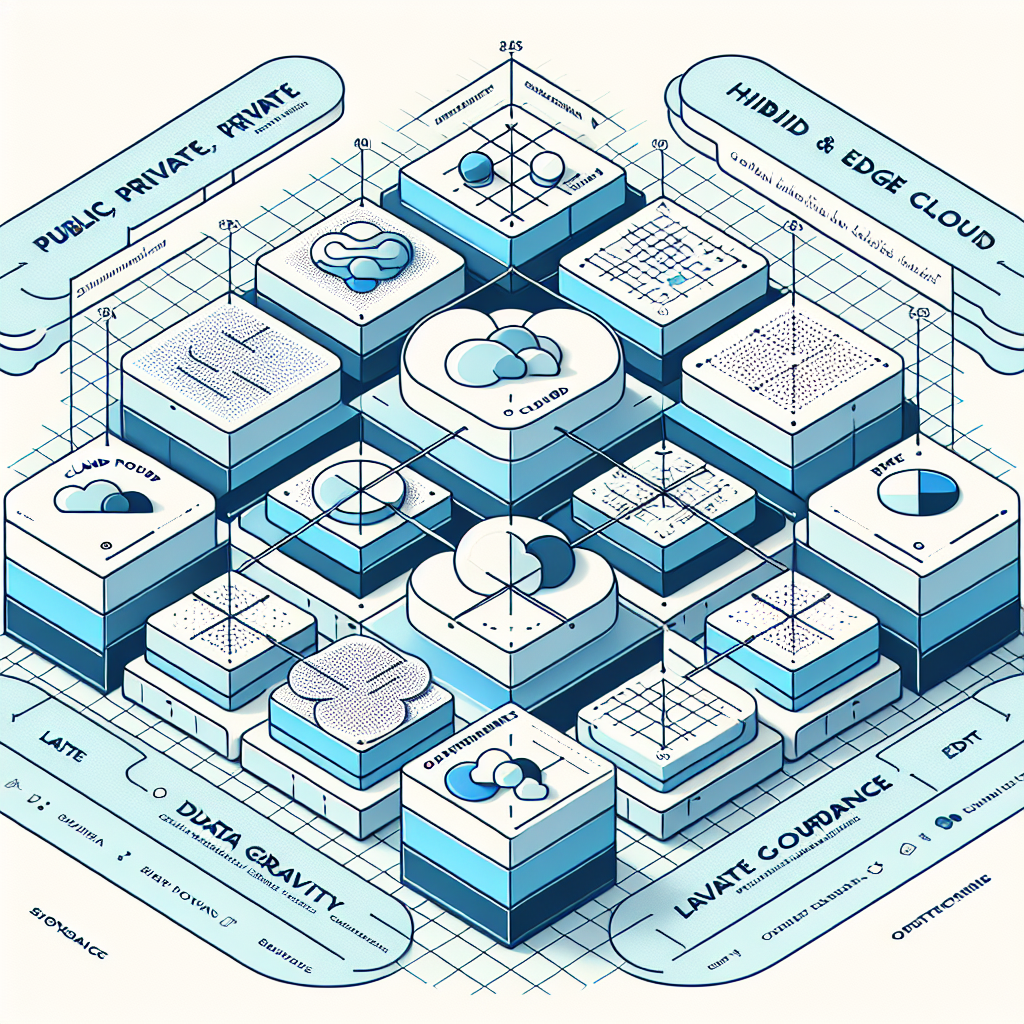
Boundaries arrive fast. A low-latency edge setup works until state coordination races a slow control plane. A sovereign requirement forces data to stay in-region, and suddenly your global analytics job is fragmented.
Failure patterns repeat:
Identity sprawl starts small, then breaks deployments when roles differ across providers. The perimeter looks fine until service-to-service auth drifts and incident response slows.
Observability drowns under cardinality. Metrics from multiple flavors overwhelm storage and alerting. Teams hide blind spots behind sampling and miss the failure that matters.
Egress shock appears late. Data pipelines work in staging, then bills surge when production traffic crosses boundary lines. A hotfix resolves performance but introduces an expensive path.
Resource quotas quietly halt scale. You planned burst capacity in a region, then the quota gate turns a traffic spike into retries and user-visible lag.
Vendor feature asymmetry bites. A capability that exists in one flavor doesn’t exist in another, or behaves differently. You test the happy path. The unhappy path is the one users hit.
From pilot to platform: stitching the flavors
Step flow: assembling Cloud 3.0 in stages

Start with a baseline you can defend under stress. Don’t split flavors until your core guardrails—identity, secrets, policy, and cost tracking—work on a single backbone.
Introduce a second flavor for a hard reason. Latency near users. Keep data in-region. Specialized hardware. Make the first cross-boundary workload small and observable. If it fails, you want to see why quickly.
Friction shows up at the interfaces:
Service identity mapping. Role names and scopes won’t align cleanly. Translate identity once, in a dedicated layer, instead of scattered YAML edits across teams.
Network assumptions. Cross-flavor connectivity is rarely transparent. Be explicit about which calls cross a boundary. Label them. Audit them. Expect retries.
Telemetry routing. Centralize only what you need for operations. Keep raw data local to reduce noise and cost. Downsample aggressively on the lines between flavors.
Cost stabilizers. Tag workloads by purpose, not team. Push budgets to the edge of decision-making. If a pipeline moves data across flavors, make the spend visible at the commit level.
When you scale, the character of the system changes:
Control plane distance matters. A single orchestrator that felt fine in pilot becomes a bottleneck under load. Consider federated control planes with clear boundaries instead of one global brain.
Consistency needs a contract. Pick which operations require strong guarantees and which tolerate lag. Over-specify guarantees and you’ll chase tail latency. Under-specify and you’ll debug ghosts.
Fallbacks must be boring. When a flavor is down, the detour should be predictable and documented. Complex failover scripts break when you’re tired.
Examples and applications
Analytics near data, inference near users
A team keeps raw data in a governed region and runs analytics in the same flavor for locality. They deploy inference closer to users on edge nodes. It works until a feature rollout needs real-time model updates everywhere.
Outcome: Update propagation lags. Edge nodes serve stale outputs for minutes. The fix is a smaller model delta and a control message, not a full redeploy. They tighten their update cadence and accept a brief accuracy dip under load.
Sovereign workloads with a shared platform
A regulated dataset can’t leave a country. The team splits the stack: control in one place, data and compute local. Operations look unified until incident response needs logs the platform can’t centralize.
Outcome: They add a local incident cache with strict retention. It’s extra work and extra reviews, but it keeps audits clean and restores on-call velocity.
GPU bursts without lock-in
Training jobs spike quarterly. Buying hardware is overkill. They burst to whichever flavor has capacity. The scheduler succeeds, then billing exposes a hidden cost path and the next quarter’s spend exceeds plan.
Outcome: They move preprocessing closer to data, shrink datasets before burst, and cap burst windows. Throughput dips slightly; spend stabilizes and the model ships on time.
Tables and comparisons
Clarity helps when roles mix. Here’s how approaches differ when navigating All flavors of cloud.
TopicStudents/BeginnersExperienced PractitionersFlavor selectionPick by feature checklistPick by constraint: latency, locality, compliance, spendIdentity and accessMap roles ad hoc per providerCreate a translation layer once, enforce centrallyNetwork pathsAssume transparent connectivityLabel and audit cross-boundary calls, budget retriesObservabilityCentralize everythingRoute only operational signals, downsample at boundariesCost controlTrack by teamTag by purpose and pipeline, expose spend at commitConsistencyDefault to strong everywhereContract per operation, accept lag where safeScalingOne global control planeFederate with bounded domainsFailoverComplex multi-step scriptsBoring, documented detours with small blast radius
FAQ
What does Cloud 3.0 mean in day-to-day work?
Operating across public, private, edge, and sovereign setups, with policies, identity, and cost visible across all.
How do I avoid lock-in when mixing flavors?
Abstract identity and policy once, keep data local, and isolate cross-boundary calls behind contracts you can swap.
When should I add a second flavor?
Only when a hard constraint demands it—latency, locality, compliance, or capacity you can’t meet otherwise.
Which signals matter most in operations?
Latency at boundaries, identity failures, egress patterns, and quota limits. Watch them before incidents do.
How do I keep costs predictable?
Tag by purpose, expose spend to developers, and move heavy data work closer to its home.
Pressure moves to product teams
Cloud 3.0 shifts responsibility. Platform teams provide guardrails; product teams choose flavors under live constraints and own the trade-offs.
The progression is subtle: fewer grand migrations, more deliberate boundaries. The winners will be the teams that treat flavors as levers, not destinations.