
Founder & CEO, Devot AI
A multi-domain Data Scientist and Software Engineer specializing in NLP, Large Language Models, and scalable AI systems. Aviral leads Devot AI with a focus on building production-ready solutions that solve complex business challenges.
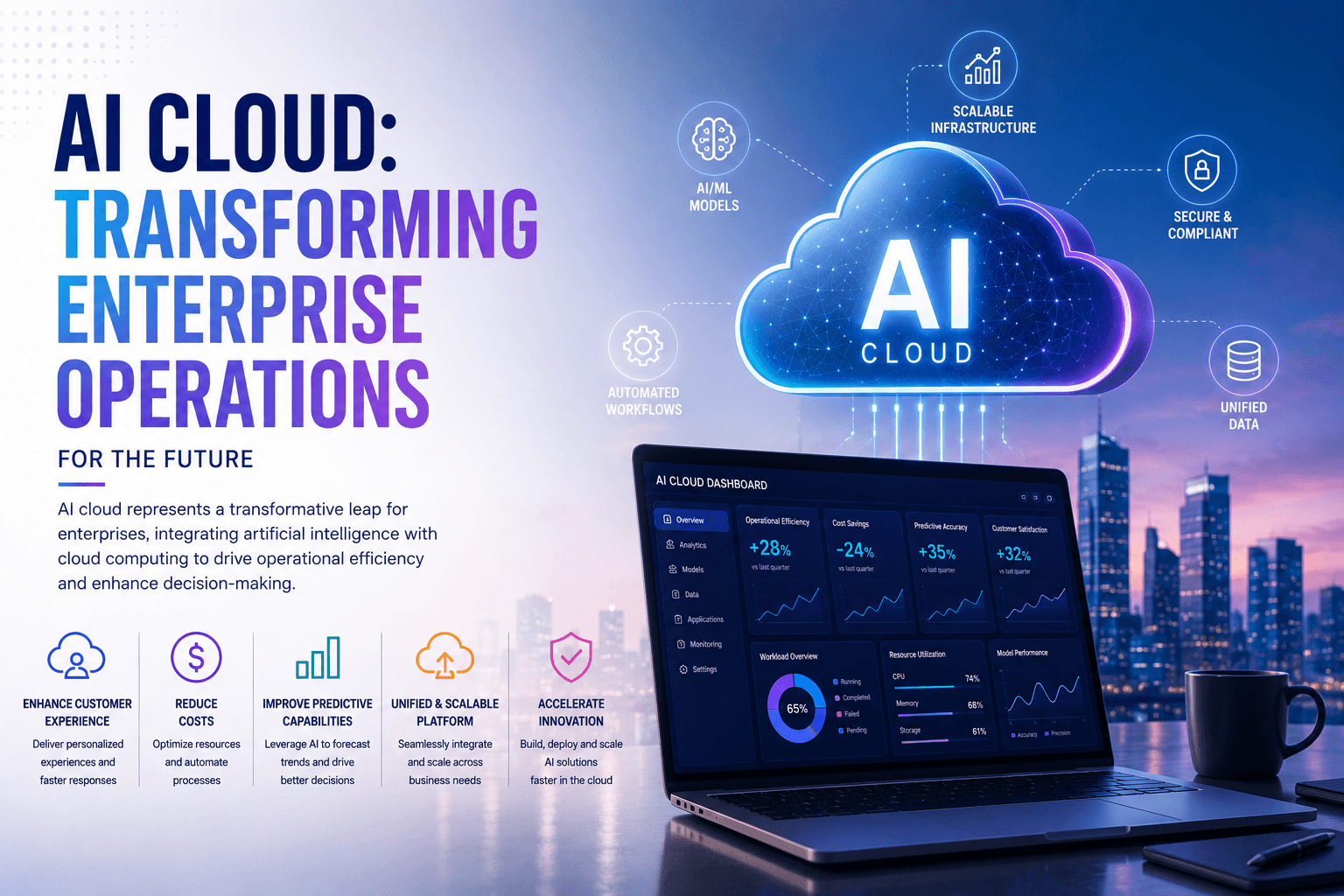
As businesses navigate the complexities of today's digital landscape, the integration of AI into cloud solutions represents a pivotal shift in operational efficiency and strategic growth. The advent of AI cloud technologies is not just a trend; it is a catalyst reshaping how enterprises manage data, deploy resources, and enhance service delivery.
Understanding AI Cloud
At its core, AI cloud refers to the deployment of artificial intelligence technologies within cloud computing environments. This integration allows enterprises to leverage advanced analytics, machine learning, and data processing capabilities without the burdensome overhead of managing physical infrastructure. For instance, a recent study indicates that businesses utilizing AI cloud solutions can achieve up to a 30% reduction in IT costs by streamlining resource management and optimizing workloads.
Real-World Applications of AI Cloud
1. **Enhanced Decision Making**: Companies can harness AI algorithms to analyze vast amounts of data, providing insights that inform strategic decisions. For example, a retail company employing AI-driven analytics reported a 25% increase in sales within six months after implementing AI cloud solutions to predict customer behavior and optimize inventory levels.
2. **Improved Customer Experience**: AI cloud enables businesses to personalize customer interactions in real-time. A financial services firm adopted an AI-driven chatbot hosted on a cloud platform that effectively handled 70% of customer inquiries without human intervention, significantly reducing response times and improving customer satisfaction scores.
3. **Predictive Maintenance**: Manufacturing companies are leveraging AI cloud to predict equipment failures before they happen. For instance, one automotive manufacturer utilized AI cloud analysis to monitor machinery health, resulting in a 40% decrease in unplanned downtime and a 20% reduction in maintenance costs.
Implementation Insights
To successfully implement AI cloud solutions, enterprises should consider the following steps:
1. Assess Business Needs: Identify specific pain points where AI can add value. This could be anything from optimizing logistics to enhancing customer interactions.
2. Choose the Right AI Tools: Select tools that align with your business goals. Prioritize platforms that offer scalability, flexibility, and integration capabilities with existing systems.
3. Ensure Data Quality: High-quality data is crucial for effective AI outcomes. Invest in data cleansing and preparation to enhance the accuracy of AI models.
4. Focus on Training: Equip your workforce with the necessary skills to operate AI cloud technologies. Proper training ensures that employees can effectively use these tools to drive business results.
Challenges and Solutions
While AI cloud offers substantial benefits, businesses must also navigate inherent challenges:
1. Data Privacy Concerns: As organizations manage sensitive data, ensuring compliance with data protection regulations is critical. Implement robust data governance frameworks to safeguard against breaches and non-compliance.
2. Integration with Legacy Systems: Many organizations grapple with integrating AI cloud solutions with existing infrastructure. Employing middleware or cloud services that specialize in bridging older systems with modern applications can help in this transition.
3. Talent Shortage: The demand for skilled professionals knowledgeable in AI is high. Working with partners or investing in training programs can help close the skills gap.
Measuring Success
To evaluate the impact of AI cloud solutions, businesses should establish clear metrics. Consider tracking:
Cost savings
Improvement in operational efficiencies
Customer satisfaction scores
Revenue growth attributed to AI-driven insights
Conclusion
The AI cloud is not merely a technological advancement; it is a transformative force that empowers enterprises to be more agile, data-driven, and customer-centric. By adopting AI cloud solutions, businesses are positioned to enhance their operational capabilities, ultimately driving significant business impacts. Whether it is optimizing processes, improving customer engagement, or reducing costs, AI cloud represents the future of enterprise operations.