
Founder & CEO, Devot AI
A multi-domain Data Scientist and Software Engineer specializing in NLP, Large Language Models, and scalable AI systems. Aviral leads Devot AI with a focus on building production-ready solutions that solve complex business challenges.
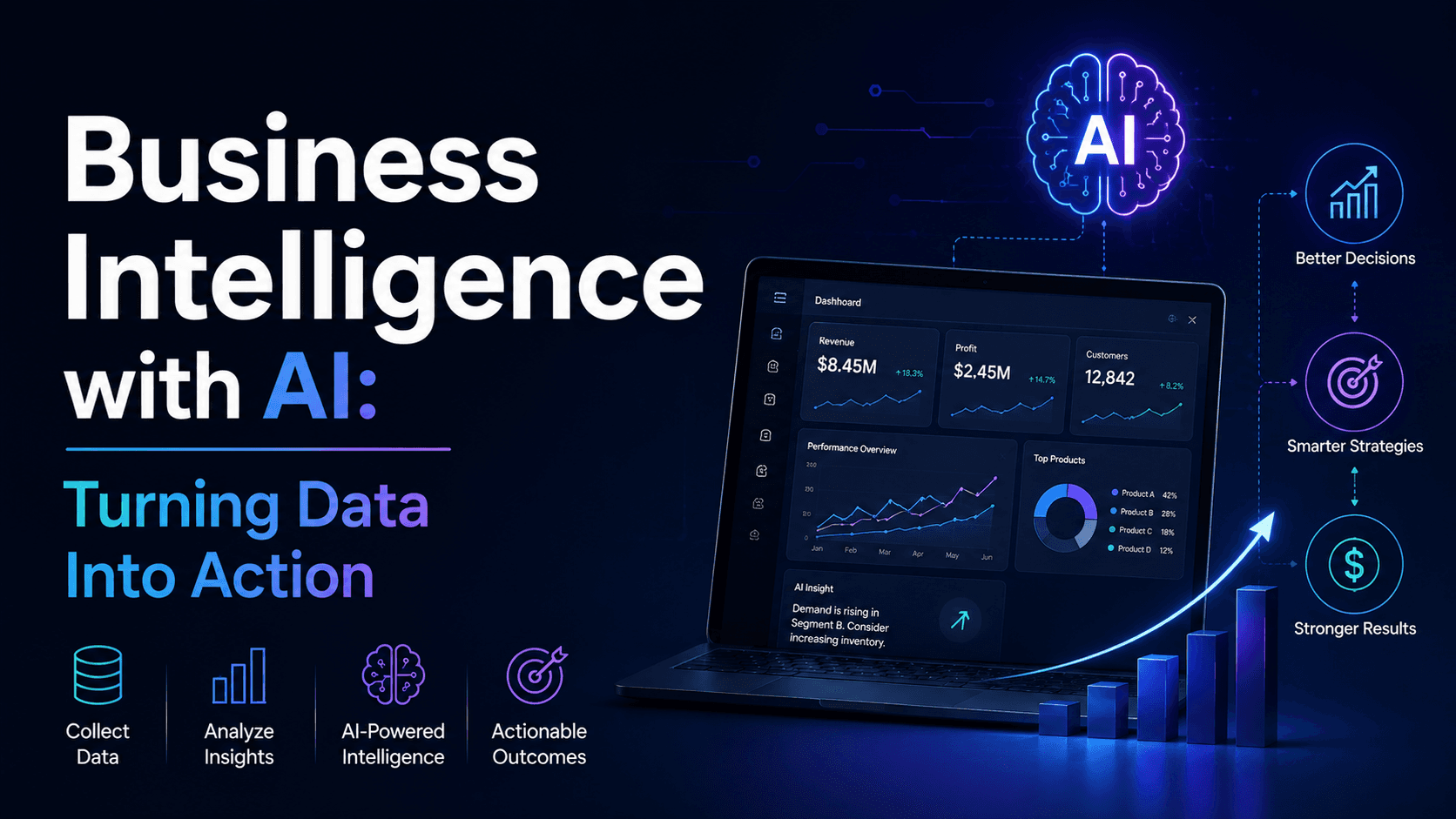
In the rapidly evolving landscape of today's business environment, companies face the daunting challenge of processing vast amounts of data generated every day. This data, when harnessed effectively, can become a powerful tool for driving strategic initiatives and decision-making processes. Enter the realm of Business Intelligence (BI) empowered by Artificial Intelligence (AI), which transforms raw data into actionable insights.
Business Intelligence is a set of technologies and strategies that analyze business data, allowing organizations to make informed decisions based on concrete evidence rather than intuition or experience. However, the sheer volume of data can overwhelm traditional BI solutions. This is where AI comes into play, providing the necessary tools to sift through data and extract meaningful patterns, trends, and insights.
Understanding AI and BI Integration
The integration of AI with BI systems allows businesses to leverage advanced analytics, predictive modeling, and machine learning algorithms. These powerful tools can help identify not just what has happened in the past, but also forecast future trends and outcomes.
Data Processing and Analysis: AI algorithms can analyze data at incredible speeds, allowing organizations to quickly process and interpret information. This efficiency is critical for operational success in dynamic markets.
Predictive Analytics: Through historical data analysis, AI can help predict future trends. This capability is invaluable as businesses can adjust strategies in a proactive manner, minimizing risks and maximizing opportunities.
Natural Language Processing (NLP): AI also aids in interpreting unstructured data through NLP, enhancing the ability to derive insights from comments, feedback, and reviews from clients or consumers.
Automation of Tasks: AI-driven BI solutions can automate repetitive data management tasks, freeing up precious time for analysts to focus on more strategic work like interpreting insights or developing business strategies.
Benefits of AI-Powered Business Intelligence
The benefits of implementing AI into BI systems are both numerous and significant. They include:
Enhanced Decision-Making: Quick insights lead to better decision-making. Organizations can react faster to market changes or consumer behavior.
Greater Efficiency: Machine learning models can process large data sets without human intervention, which reduces the time spent on manual data entry and analysis.
Improved Customer Satisfaction: By analyzing consumer behavior, businesses can tailor their products, services, and communications to meet the needs of their customers, leading to enhanced customer experiences.
Cost Reduction: Businesses can identify areas of inefficiency, allowing them to cut unnecessary costs and allocate resources more effectively.
Real-World Applications of AI in Business Intelligence
Several industries have already begun reaping the benefits of integrating AI with their BI strategies.
Retail: Large retailers use AI algorithms to analyze customer purchasing patterns, predicting future sales trends and optimizing inventory management.
Finance: Financial institutions incorporate AI for risk assessment and fraud detection, significantly speeding up analytical processes that would otherwise take analysts a long time to complete.
Healthcare: AI models aid in analyzing patient data for better health outcomes, predicting disease outbreaks, and improving overall healthcare delivery.
Manufacturing: AI in manufacturing helps optimize supply chains and enhance product quality through predictive maintenance and real-time decision-making.
Getting Started with AI-Driven BI Solutions
Implementing AI in BI doesn't happen overnight but requires careful planning and consideration. Here are some steps to help organizations get started:
Define Clear Objectives: Establish what you aim to achieve with BI and AI. Whether it's improving customer insights, operational efficiency, or financial performance, clear goals will guide your implementation strategy.
Choose the Right Tools: Invest in AI-driven BI platforms that integrate seamlessly with your existing systems. Tools should be user-friendly and capable of handling the scope of your data.
Data Governance: Ensure that your data is accurate, clean, and governed appropriately. Data quality is paramount for effective AI applications.
Train Your Team: Provide training to ensure that your team understands how to leverage these new tools effectively. Encourage a data-driven culture within your organization.
The Future of Business Intelligence
As organizations increasingly recognize the critical role of data in shaping their futures, the integration of AI into BI systems will continue to expand. Advancements in AI technology will bring about even more sophisticated analytic capabilities, streamlining processes and enhancing data-driven decision-making.
In conclusion, the synergy between Business Intelligence and Artificial Intelligence represents a significant leap forward in how businesses can harness data. By turning raw information into actionable insights, companies can not only survive but thrive in an ever-competitive marketplace. Embracing this evolution paves the way not just for informed decisions but for strategic innovations that redefine industries.