
Founder & CEO, Devot AI
A multi-domain Data Scientist and Software Engineer specializing in NLP, Large Language Models, and scalable AI systems. Aviral leads Devot AI with a focus on building production-ready solutions that solve complex business challenges.
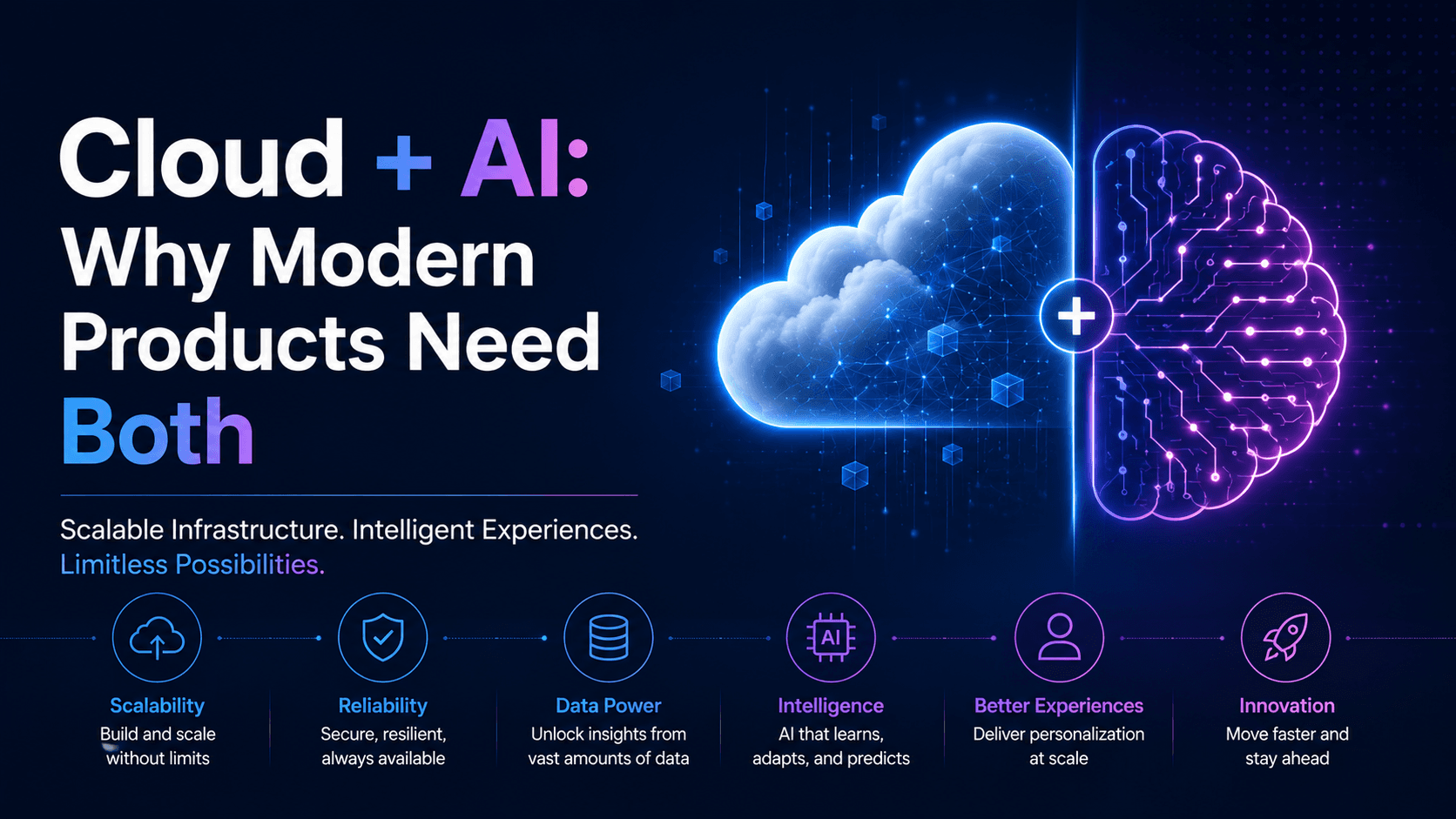
In today's fast-paced technological landscape, businesses are constantly seeking ways to innovate and stay ahead of the competition. One of the most potent combinations leading this charge is the integration of Cloud Computing and Artificial Intelligence (AI). Together, these technologies not only drive efficiency and scalability but also foster an environment of continuous improvement and innovation. This blog explores why modern products need both cloud and AI and how this combination can transform the way businesses operate.
The Rise of Cloud Computing
Cloud computing has changed the way businesses approach IT infrastructure. It offers scalability, flexibility, and cost savings by allowing companies to access computing resources over the internet rather than maintaining on-premises hardware. This paradigm shift allows organizations to focus their resources on innovation rather than infrastructure management. With cloud computing, companies can rapidly deploy new applications and services, adapt quickly to changing market demands, and harness computing power without significant upfront capital expenditures.
The Power of Artificial Intelligence
Artificial Intelligence, on the other hand, is reshaping numerous industries by incorporating machine learning, natural language processing, and data analytics into everyday business operations. AI allows organizations to analyze vast amounts of data quickly, make informed decisions, and deliver personalized experiences to customers. Whether it's through chatbots providing customer support or sophisticated algorithms predicting market trends, AI plays a pivotal role in modern product development.
The Synergy of Cloud and AI
When cloud computing and AI work together, they create a powerful synergy that enhances the capabilities of modern products. Here are some compelling benefits:
Scalability and Flexibility: With cloud-based AI solutions, businesses can scale their applications according to demand. This means that during high traffic periods, resources can be allocated seamlessly to maintain performance without downtime.
Real-time Data Processing: The cloud provides access to data storage and computing power, enabling real-time data processing. This is crucial for AI applications that require immediate feedback for training models and making predictions based on current data.
Cost Efficiency: Combining cloud and AI reduces setup and maintenance costs associated with on-premise systems. Organizations can leverage cloud infrastructure to run AI applications without significant investment in hardware.
Access to Advanced Algorithms: Many cloud service providers offer AI tools and frameworks that allow businesses to implement advanced algorithms without extensive expertise in machine learning. This democratizes access to AI capabilities, enabling companies of all sizes to innovate using these technologies.
Enhanced Security: Top-tier cloud providers invest heavily in security features and compliance, providing businesses with robust protection against data breaches. This offers peace of mind to organizations utilizing AI, as sensitive data can be managed securely and efficiently.
Industry Examples
The integration of cloud and AI is evident across numerous industries. In healthcare, telemedicine platforms leverage AI algorithms to analyze patient data in the cloud, providing insights and recommendations to healthcare professionals in real time. In finance, companies are using AI for fraud detection by analyzing transaction patterns on cloud platforms, enabling faster and more accurate deterrence of fraudulent activities.
E-commerce companies are also reaping the rewards of this powerful combination, utilizing AI to analyze customer preferences and behavior stored in the cloud. This allows them to provide personalized product recommendations, optimize pricing strategies, and effectively manage inventory.
Challenges and Considerations
Despite the numerous benefits, businesses should also be aware of the challenges associated with cloud and AI integration. Data privacy and compliance must be top-of-mind as organizations must navigate evolving regulations regarding data usage. Additionally, companies should ensure they have the right skill sets and resources in place to effectively utilize these technologies.
Conclusion
In conclusion, the combination of cloud computing and artificial intelligence has become indispensable for modern product development. Businesses that harness this synergy can enhance their operational efficiency, make data-driven decisions, and create more personalized customer experiences. As technology continues to evolve, those who adopt and innovate with cloud and AI will be better positioned to thrive in an increasingly competitive marketplace. Whether you are a small startup or a large enterprise, consider embracing these technologies to push your products and services to new heights.